14 Best Fintech Website Templates for Finance Apps (2026)

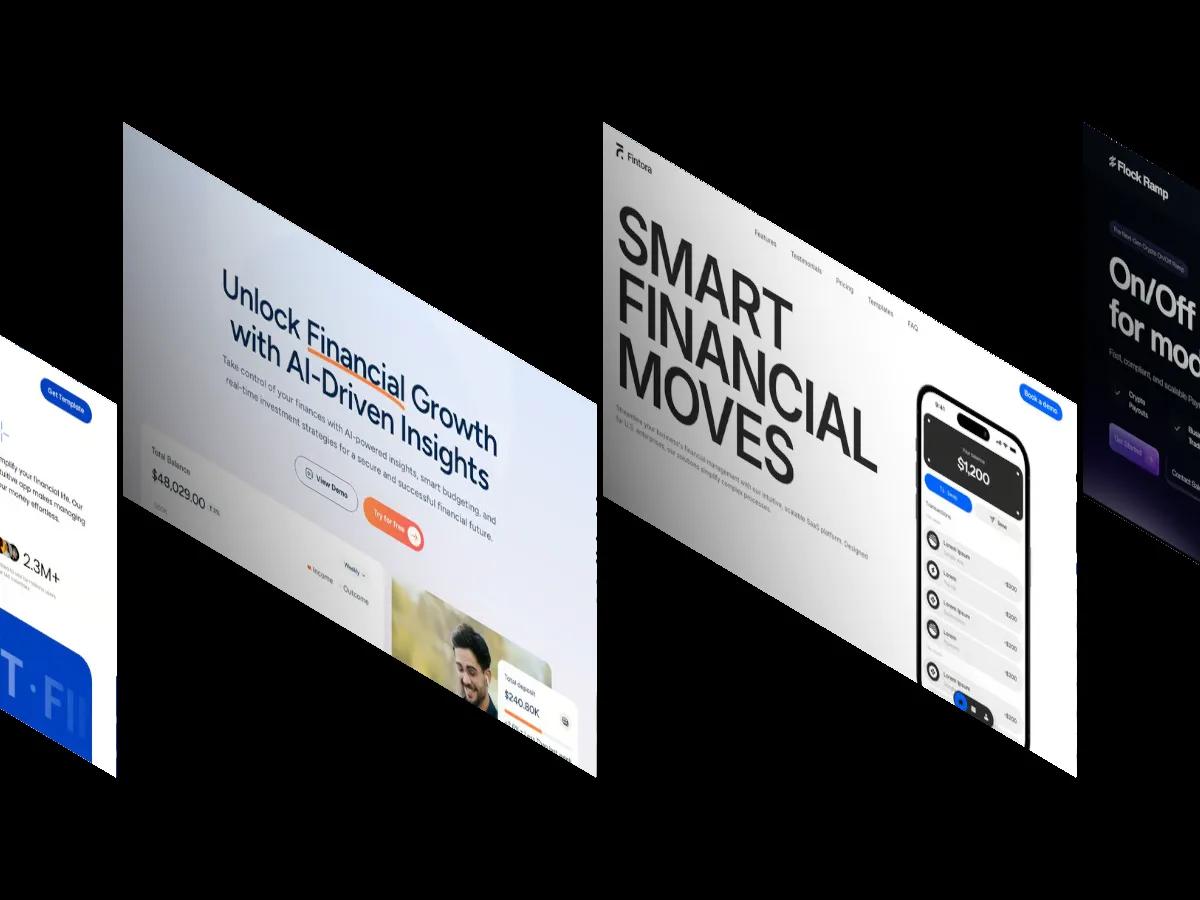
Only 16 templates in our library carry the Financial Services tag, and not all of them are finance products. We checked every demo and ranked the 14 fintech website templates actually built for banks, payment apps, crypto platforms and money tools.
A fintech product asks people to hand over something they guard closely: their money, or at least their bank login. The website has to earn that before anyone reads a feature list. It needs to show the product, explain how it makes or saves money, name the plans plainly and look like a company that will still exist next year. A template built for a design studio can't do that, however good it looks.
Finding the right one is harder than it sounds. Only 16 of the templates we publish carry our Financial Services tag, and four of those turned out to be a startup kit, a personal finance blog, an agency site and an AI support chatbot. Two of the strongest fintech templates we have carry no finance tag at all. So we opened every demo and kept the 14 that are built for banks, payment apps, crypto platforms, budgeting tools and investment products. They're ranked below, with the problems we found in each demo.
Every score comes from our multi-reviewer process: designers and developers with 10 or more years of experience score each template independently, and we publish the average. You can browse the tag yourself on our financial services templates page.
The 14 Picks at a Glance
| Template | Platform | Built for | Design | Dev | Price |
|---|---|---|---|---|---|
| Cash | Webflow | Payment and card startups with a dark brand | 9.6/10 | 9.7/10 | $129 |
| Get Swipe | Webflow | Savings, rewards and spending apps | 9.6/10 | 9.5/10 | $79 |
| Catalis | Webflow | Business finance software with paid plans | 9.2/10 | 9.1/10 | $169 |
| Satoshi | Webflow | Digital banks and multi-product finance brands | 8.8/10 | 9.2/10 | $129 |
| Visto | Webflow | AI investment and deal platforms | 8.9/10 | 9.1/10 | $99 |
| Fizens | Framer | Personal finance apps with a free tier | 8.8/10 | 8.9/10 | $99 |
| Wallet | Framer | Crypto wallet apps | 8.7/10 | 8.5/10 | Free |
| Mobit | Framer | Payment apps with one paid upgrade | 8.3/10 | 8.6/10 | $49 |
| MezApk | Framer | Card and expense apps on iOS | 7.5/10 | 7.5/10 | Free |
| Ballance | Framer | B2B payments and spend management | 7.5/10 | 7.3/10 | $129 |
| Finetra | Framer | AI budgeting and investing apps | 7.3/10 | 6.9/10 | $49 |
| Visuo | Webflow | One-page business finance tools | 7.3/10 | 6.9/10 | Free |
| Flock Ramp | Webflow | Crypto buy, sell and payment gateways | 6.7/10 | 7.3/10 | $99 |
| Fintora | Webflow | One-page finance SaaS launches | 7.2/10 | 6.8/10 | Free |
Eight are on Webflow and six on Framer. Four of the top five come from one creator, JP: Cash, Get Swipe, Satoshi and Visto.
What Should a Fintech Website Template Include?
A fintech website template needs five things: a hero that shows the product (a card, an app screen or a dashboard), a plain explanation of how it moves or grows money, a pricing or plans section, trust signals such as security notes and partner logos, and one clear action, whether that's an app download, an account sign-up or a demo request. Legal and privacy pages matter more here than in most niches.
Then match the template to how you sell. Consumer apps sell on downloads, so look for App Store buttons and phone mockups: Fizens, Wallet, Mobit and MezApk all lead that way. B2B products sell on demo calls, which is what Ballance, Visto and Fintora are built around. Brands with several products, like a bank with savings, cards and loans, need many page layouts, and Satoshi ships 10 landing pages and 10 feature pages for exactly that.
On platform, Webflow suits teams that will publish a lot and want structured CMS content, and it's the only choice here with built-in ecommerce pages (Satoshi and Flock Ramp include a cart). Framer suits small teams that want a polished app site live quickly. Our Framer vs Webflow comparison covers the trade-offs in detail.
The 14 Best Fintech Website Templates
Ranked by Overall Score, highest first. Each name links to its review page, where a screen recording of the full homepage plays on a loop.
Cash
Design: 9.6/10
Dev: 9.7/10
Price: $129
Best for: payment, card and credit startups that want a dark, confident brand and several homepage options to choose from
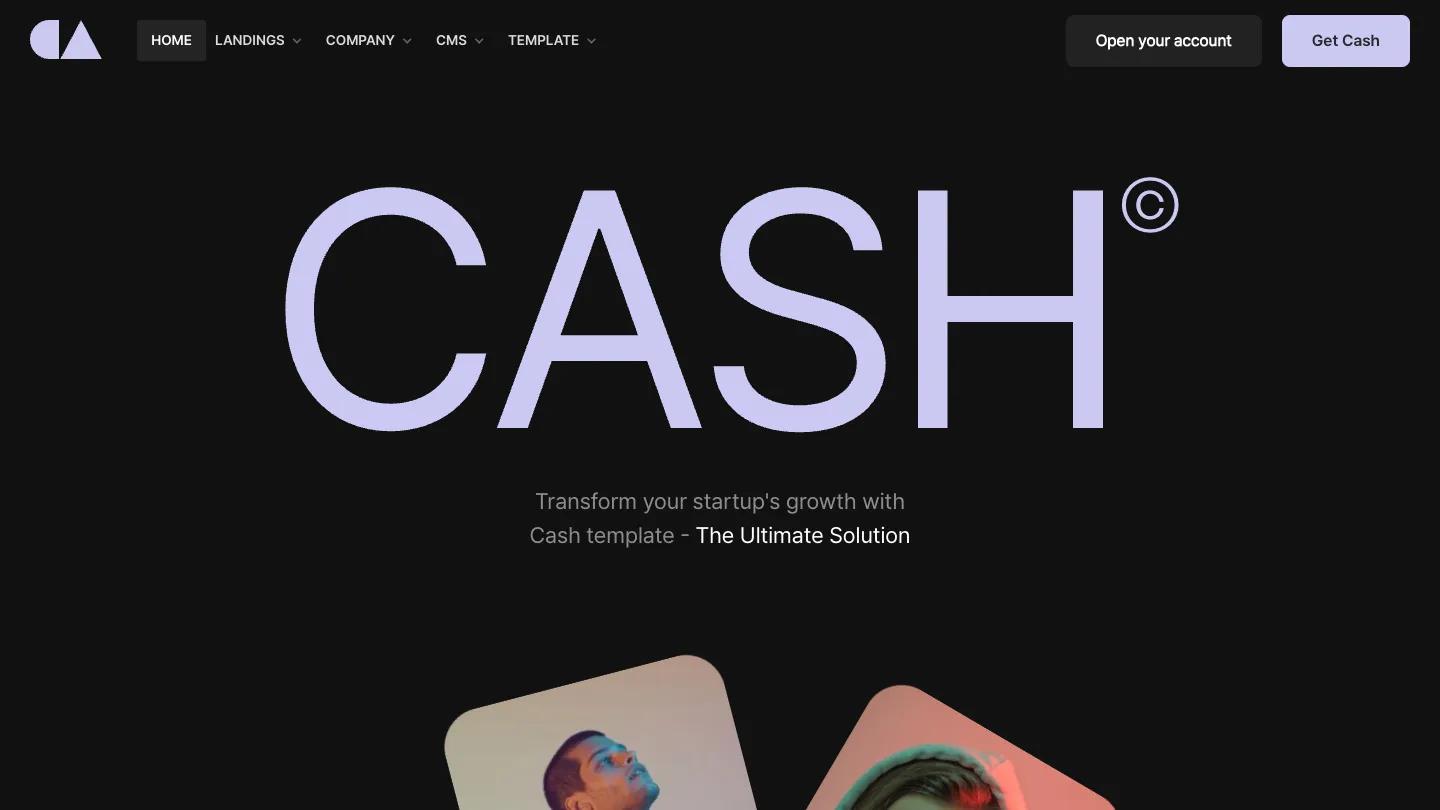
Cash has the highest Dev Score on this list and one of the strongest identities. JP sets the product name in oversized lavender type on black, then lets the palette move through soft pink, coral and light blue across six landing pages, each with a different layout: some pure type, some card grids, one built around photography with metrics laid over a dark grid. Five company and feature pages, three blog layouts and a create account page round out the set.
Design: 9.6/10 is earned by restraint. The pastel accents never fight the black, and Pretendard runs through everything at large sizes without crowding the layout. The weakness is the copy. The landing pages talk mostly about startup growth and about the template itself, with only a few finance lines such as a pricing row about blocking a card in one tap, and several blocks are still lorem ipsum. You're buying a strong frame and writing the fintech story yourself.
Get Swipe
Design: 9.6/10
Dev: 9.5/10
Price: $79
Best for: consumer savings, cashback and spending apps that want a friendly, colorful brand
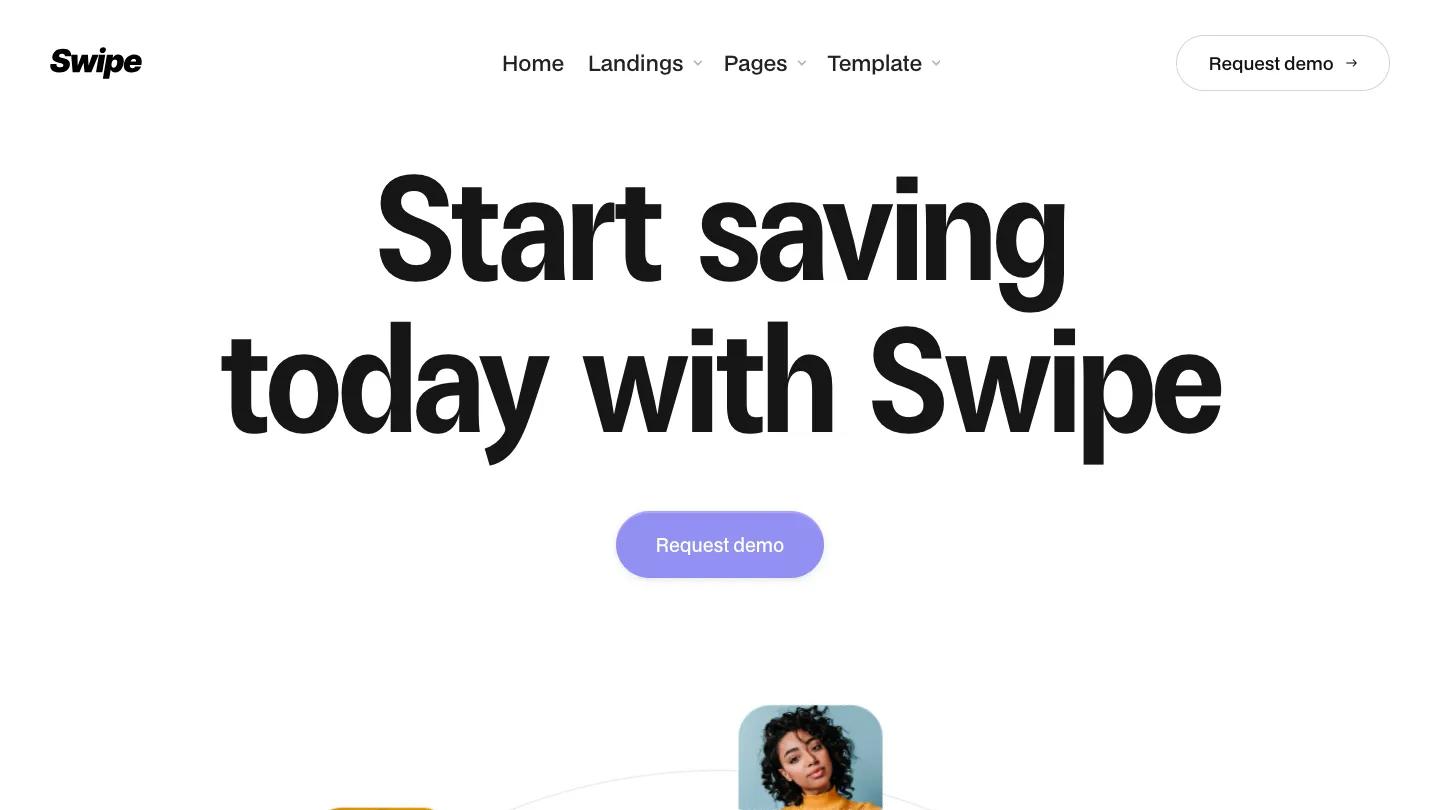
Get Swipe carries no finance tag in our library, and it should. Its eight landing pages are written for a savings and rewards app: one opens with "Swipe your way to easy savings" and runs through subscription management, instant payment notifications and an FAQ, another leads with "Start saving today with Swipe" and a savings goals tracker. Each page shifts the accent color, from mint to coral to electric blue, against black type on white.
At $79 it's the best value among the top five, and the page set is unusually practical: sign up, log in, FAQ, contact, legal pages, a blog and a shop. The catch is that the demo's own catalog page calls it a template for SaaS companies and opens with a line about design teams, so the homepage you see first doesn't represent the landing pages. Start from one of those, and replace the lorem ipsum under the repeated "Rethink credit decisioning" blocks.
Catalis
Design: 9.2/10
Dev: 9.1/10
Price: $169
Best for: budgeting, expense and business finance software that sells on plans and publishes articles
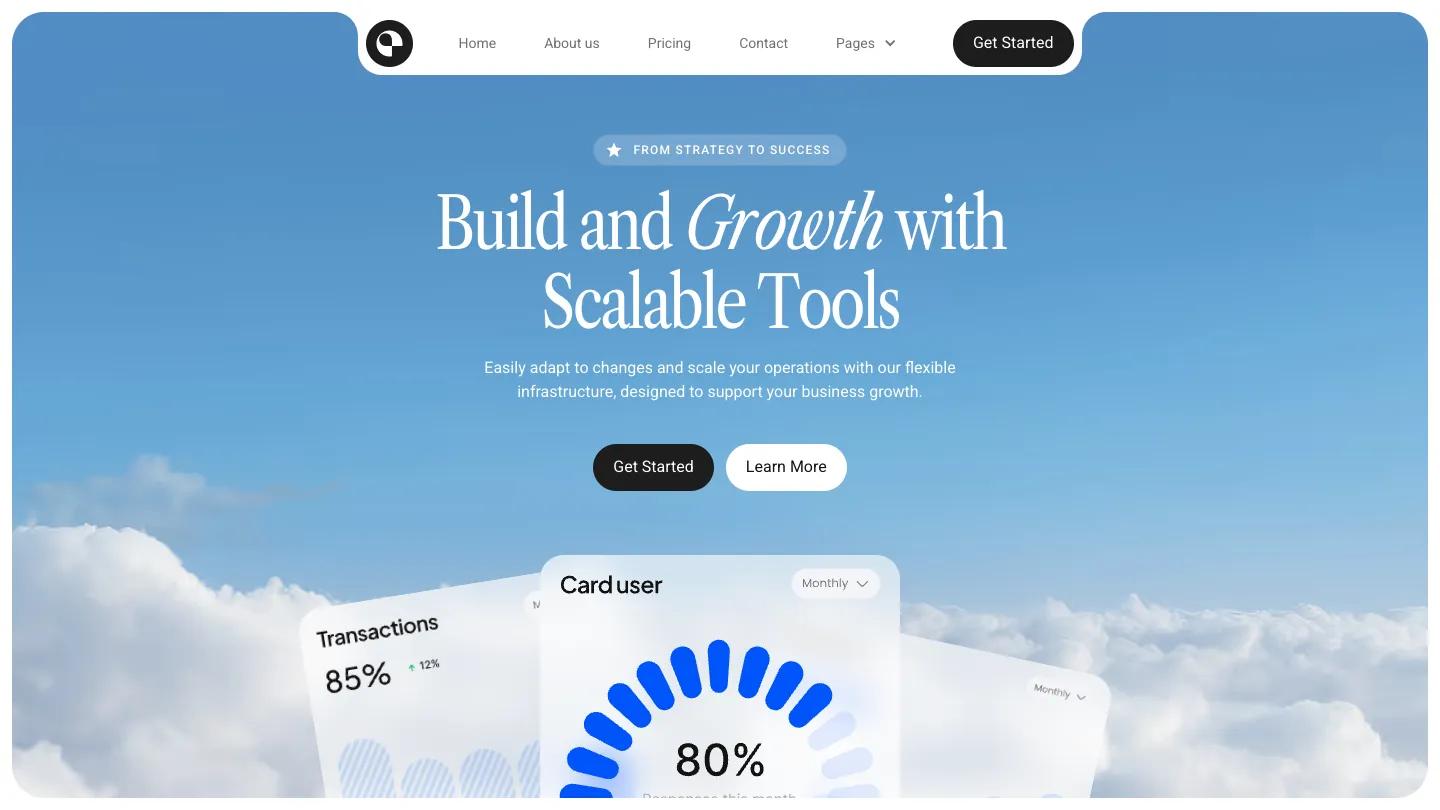
Catalis is the calmest template here. Temlis puts the hero inside a big rounded panel of soft blue with clouds rising from the bottom, and frosted dashboard cards, one with a curved blue gauge reading 80%, float up through them. The headline is set in Libre Caslon Condensed with one italic word, an unusual choice for fintech that makes it look more like a private bank than an app.
It's also one of the most complete builds: three homepage versions, Features, Pricing, About, three blog layouts, three contact layouts and a changelog. The benefits copy is written for the niche, covering budgeting, expense tracking and investment management, and the sample articles are about emergency funds and budgeting. Check the details before launch: the hero headline reads "Build and Growth", one stat reads "99 Increase in billing hours" with no unit, and a sample post still says 2024. At $169 it's the most expensive template on the list.
Satoshi

Design: 8.8/10
Dev: 9.2/10
Price: $129
Best for: digital banks and finance brands with several products that each need their own page
Satoshi is a kit more than a site, and for a bank that's the point. It ships 10 landing pages, 10 feature pages, three contact layouts, three create account forms, legal pages and a product catalog with a cart. If you sell a savings account, a card and a loan, each one gets a distinct page without anyone designing from scratch. One landing opens with "Banking made simple." above a scrolling strip of stock tickers.
Dev: 9.2/10 reflects how consistently those 30-odd pages share one system of navy General Sans headings, blue buttons and components. The front page is a catalog of previews, not a homepage, so you'll build your real homepage from one of the landing layouts. The ticker strip shows placeholder symbols that all read $0.84, which looks broken to anyone who trades, so replace or remove it.
Visto

Design: 8.9/10
Dev: 9.1/10
Price: $99
Best for: AI investment, venture and deal-flow platforms with a strong photographic brand
Visto looks nothing like the rest of this list. The hero runs moving footage edge to edge, from a man leaning out of a car window at dusk to storm clouds over a wheat field, with the name in giant white letters at the bottom left and a lime Request Demo button in the corner. Scroll, and a numbered feature list from Predictive Scoring to Secure Collaboration leads into split panels and case cards that each pair a client mark with a one-line result.
It's the right pick when your investors and customers respond to brand more than dashboards. It's the wrong pick if you don't have rich footage and photography, because the whole template depends on it. The demo case results quote specific numbers you'll need to replace with your own, and the homepage is long. On a phone the footage fills the screen and the menu moves into a round white button, which keeps the first view clean.
Fizens
Design: 8.8/10
Dev: 8.9/10
Price: $99
Best for: personal finance and budgeting apps that offer a free plan
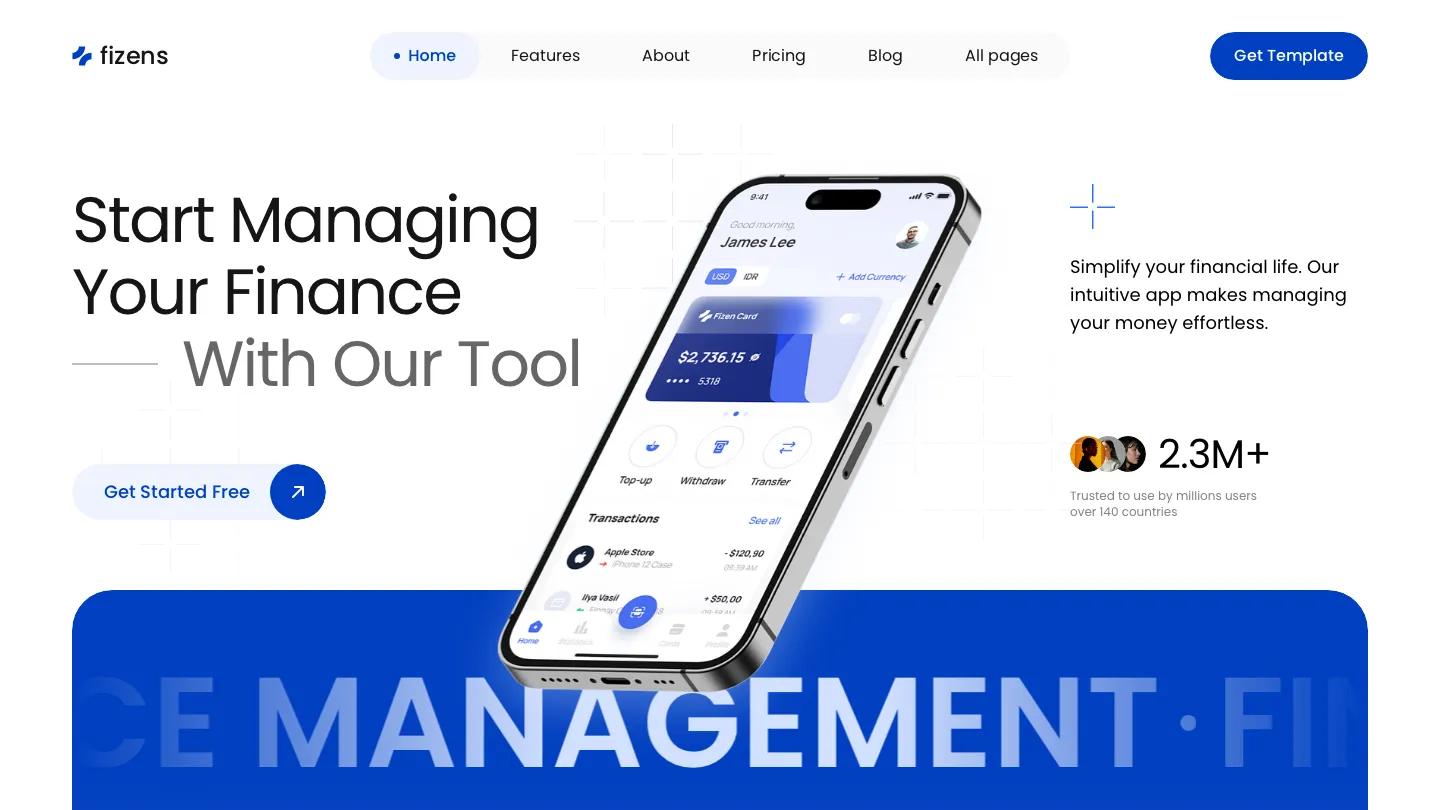
Fizens is the strongest Framer template for a consumer money app. The hero sets "Start Managing Your Finance With Our Tool" beside a tilted phone showing a balance and a transaction list, and a giant blue ticker runs across the bottom. Below that sits one of the deepest page sets on this list: Features, Pricing, Integration, Download, Changelog, Team, Blog and a job detail page.
Pricing runs from a free Starter plan to $40 a month, which fits the freemium model most budgeting apps use. Two things need finishing: the monthly and yearly switch shows a 20% label but no yearly prices, and a user counter in the demo reads "0.0M+". Neither is hard to fix, but both would cost trust on a live finance site.
Wallet
Design: 8.7/10
Dev: 8.5/10
Price: Free
Best for: crypto wallet apps that sell on downloads, not subscriptions
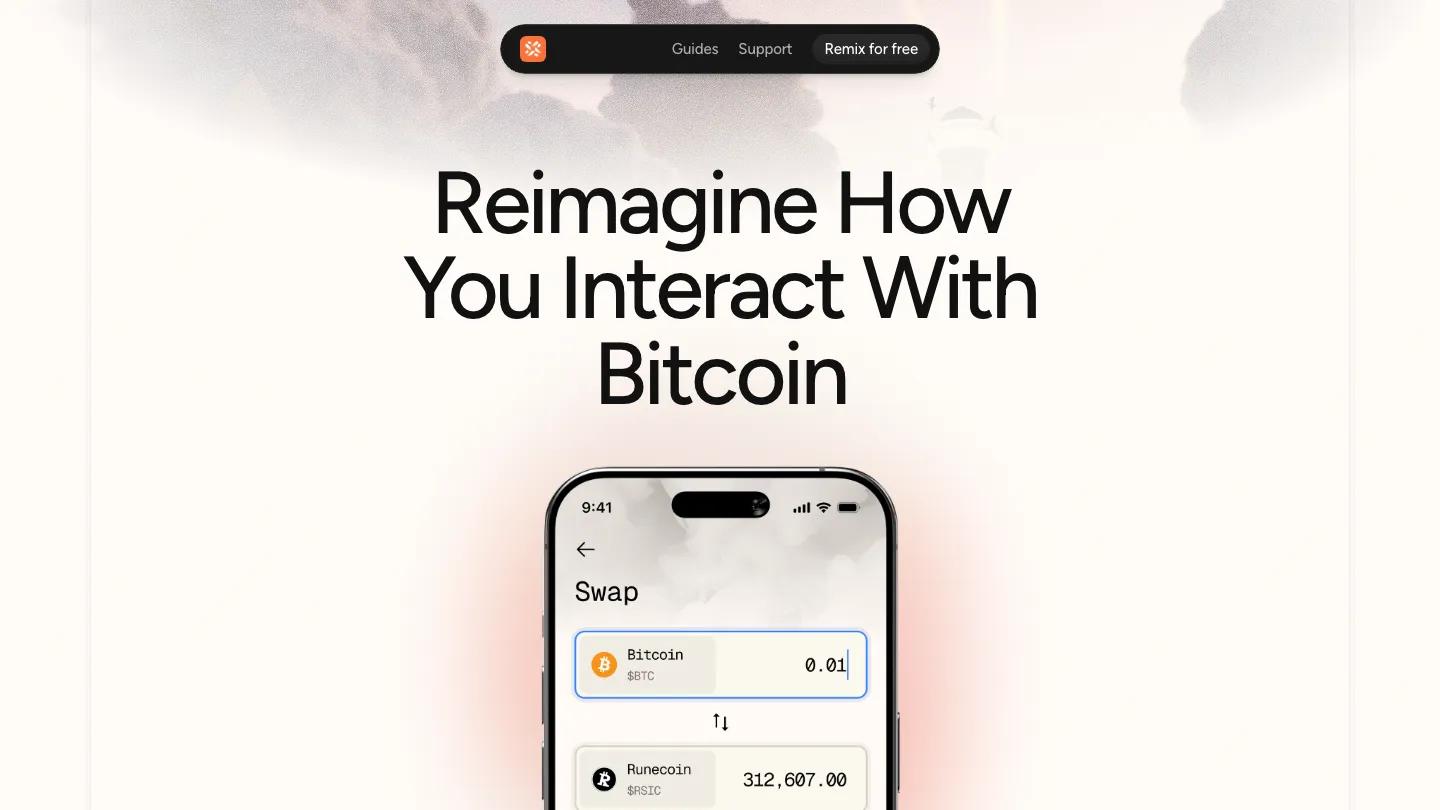
Wallet is the highest-scoring free template on this list, and it's written for one product: a Bitcoin wallet app. "Reimagine How You Interact With Bitcoin" sits above a phone showing a token swap, followed by feature blocks on notifications, transactions and portfolio insights, a security section covering multi-signature and biometrics, and a guides blog.
The security section is the detail that makes it work for crypto, where buyers ask about custody before anything else. It has no pricing page at all, which is right for a free app and wrong for anything with plans. Every download button points to the App Store only, so Android users need a second button.
Mobit
Design: 8.3/10
Dev: 8.6/10
Price: $49
Best for: mobile payment apps with a free plan and one paid upgrade
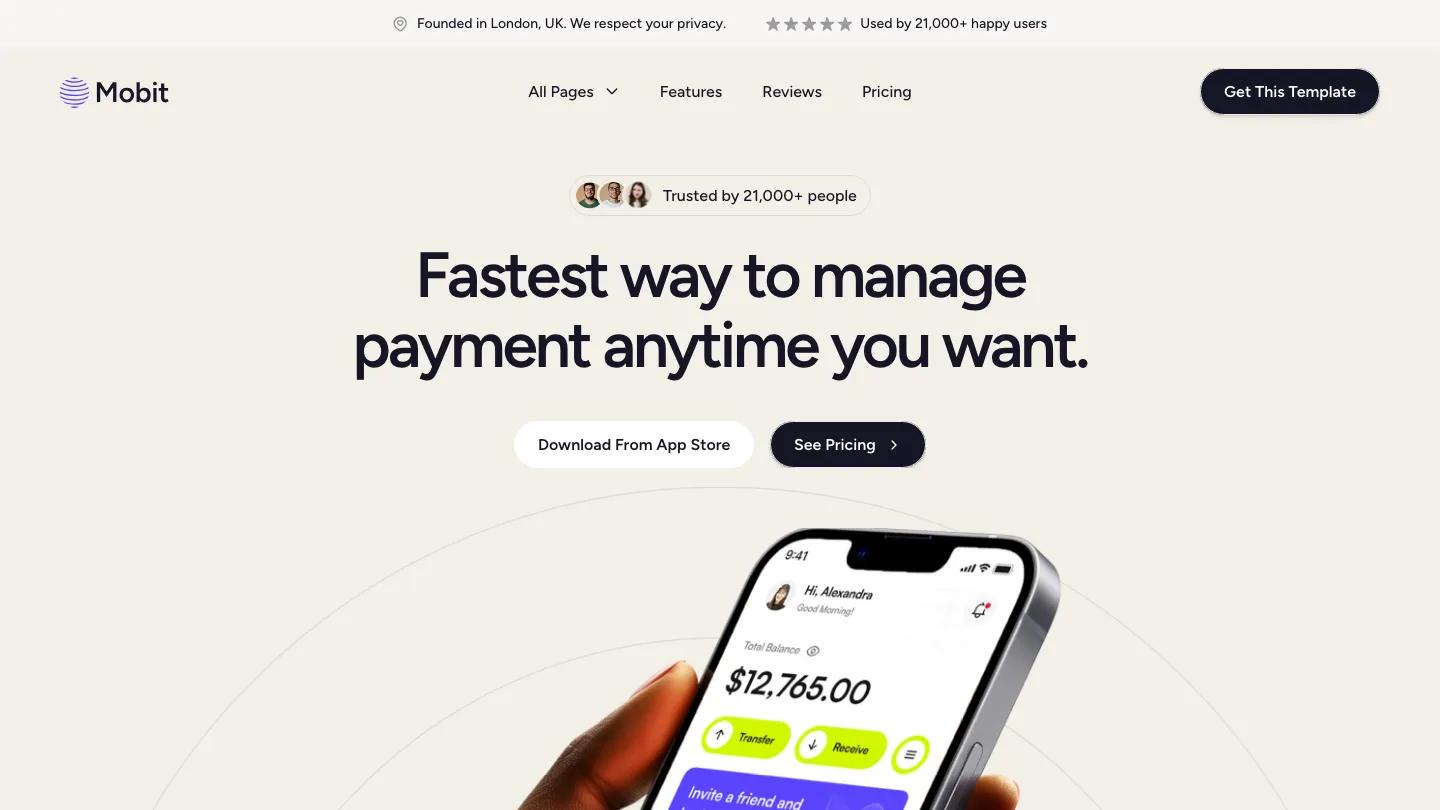
Mobit opens with "Fastest way to manage payment anytime you want" and a hand holding a phone with a card balance, flanked by Download From App Store and See Pricing buttons. That pairing suits an app that converts both ways, some users downloading straight away and others checking the price first. Two plans, Free and Pro, appear on the homepage and on a separate pricing page.
Budget cleanup time. Only one of the five FAQ answers is written, the integrations section names no actual tools, and the menu and footer carry links promoting the template seller. At $49 it's still good value for a two-plan payment app, as long as you finish those pieces.
MezApk
Design: 7.5/10
Dev: 7.5/10
Price: Free
Best for: card management and expense tracking apps that launch on iOS first
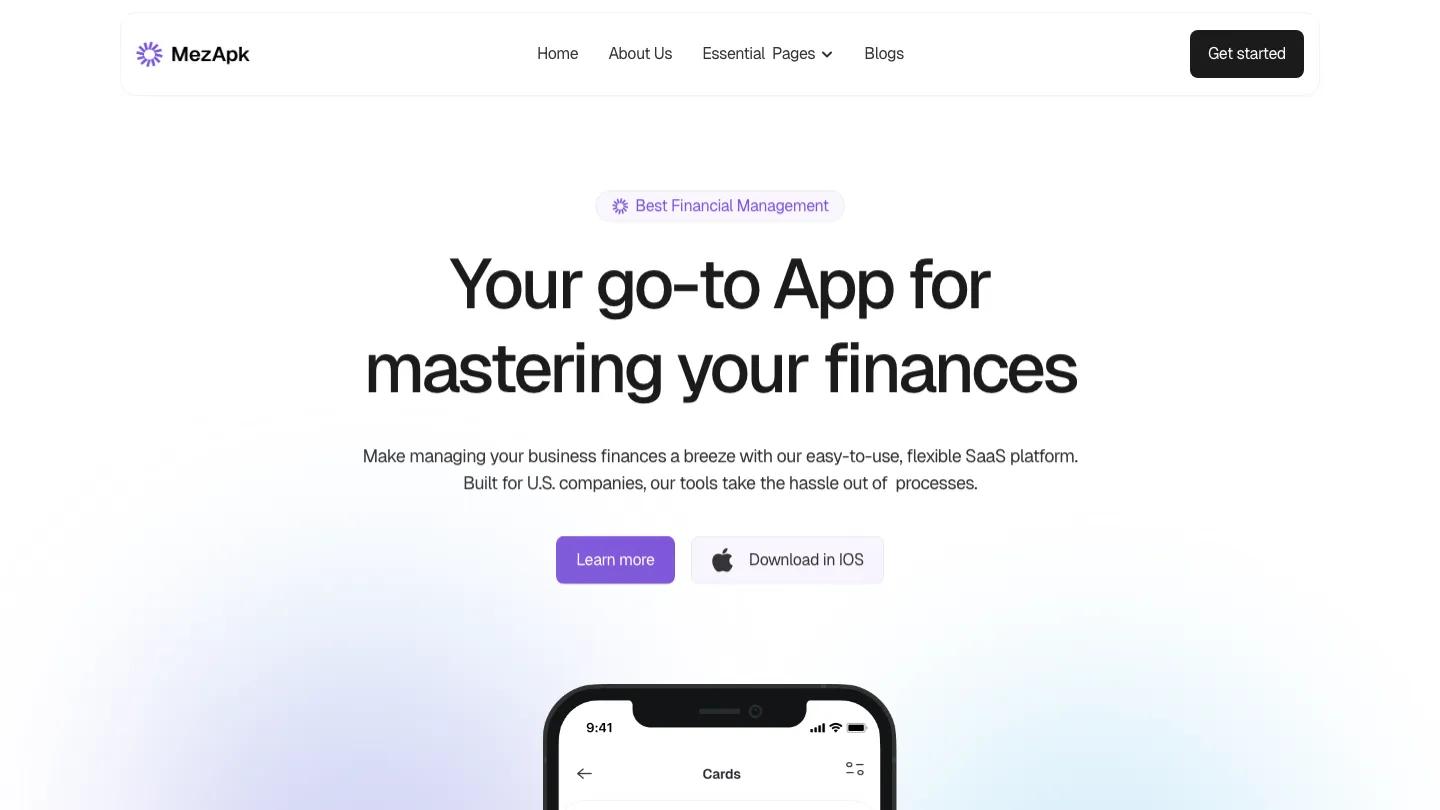
MezApk is a light app page on a pale gradient with purple accents: "Your go-to App for mastering your finances" over a phone showing a cards screen, with Learn More and Download in iOS buttons. The feature list fits the niche well, covering card management, instant transaction alerts, financial analytics and expense, budget and investment tracking, and the page set includes a second homepage, About, Features, Pricing, Contact and a blog.
It's free, which makes the gaps forgivable but real. The product is called both MezApk and MezApp in the copy, the sample blog posts are about choosing a CRM and automating customer support rather than money, and the only download button is for iOS. Rewrite the blog samples before launch, or search engines will read your finance app as a CRM.
Ballance
Design: 7.5/10
Dev: 7.3/10
Price: $129
Best for: B2B fintech such as corporate cards, payments and spend management
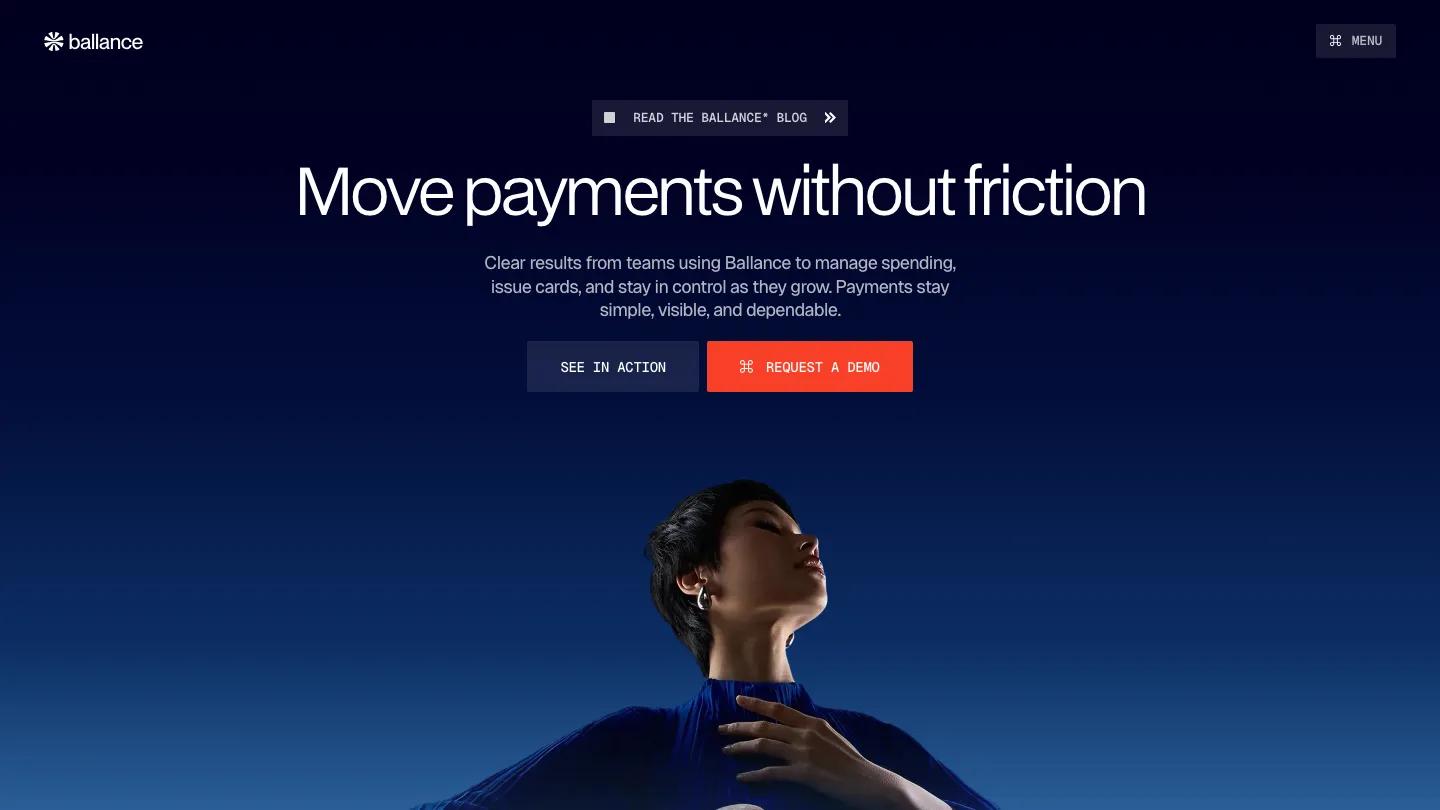
Ballance is built for the most demanding buyer on this list: a finance team. "Move payments without friction" sits on deep navy with See in Action and Request a Demo buttons, and it's the only template here with compliance badges, alongside a customer stories section, careers and full legal pages. For a company selling to CFOs, those pages answer questions that come up in the first sales call.
Pricing has three plans and a comparison table, but the headline says "starting at $0" while the cheapest plan is $180 a month, a mismatch a finance buyer will notice immediately. The homepage also shows no product screens, so add your own interface shots, and at $129 it's priced with the top Webflow picks while scoring well below them.
Finetra
Design: 7.3/10
Dev: 6.9/10
Price: $49
Best for: AI budgeting and investing apps with paid plans and a help center
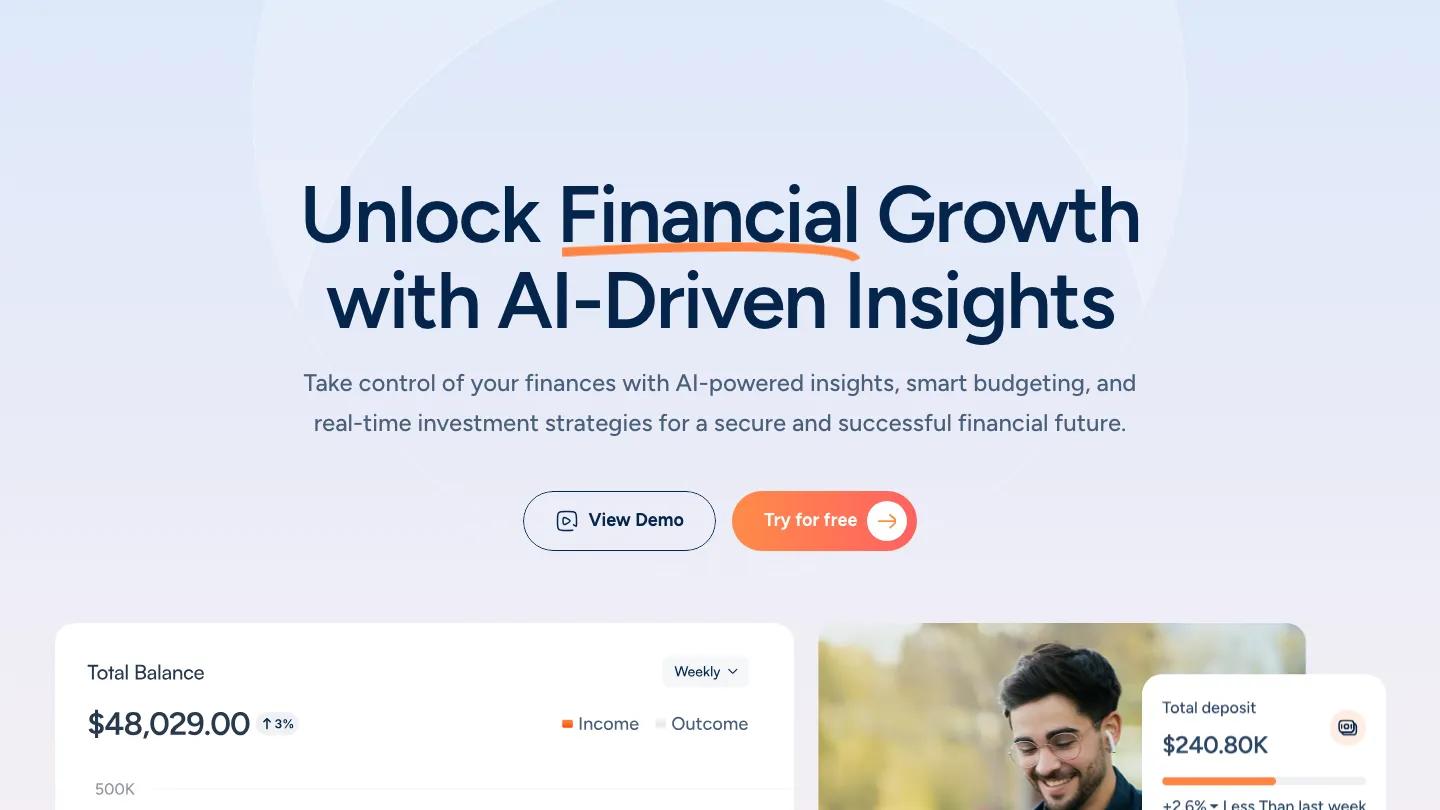
Finetra pairs a headline about financial growth through AI insights with an orange Try for Free button and a balance card showing income and outcome tabs beside a portrait and a deposit total. Its page set is unusually complete for the price: Pricing with a plan comparison table, a Help Center, Reviews, a blog and legal pages. A help center is rare in templates and useful in fintech, where support questions about transfers and fees never stop.
Dev: 6.9/10 is among the lowest build scores here, so test it on a phone before you commit. The homepage carries no pricing and the annual switch shows no annual prices, so finish those before launch.
Visuo
Design: 7.3/10
Dev: 6.9/10
Price: Free
Best for: small business finance tools that need a free one-page launch site
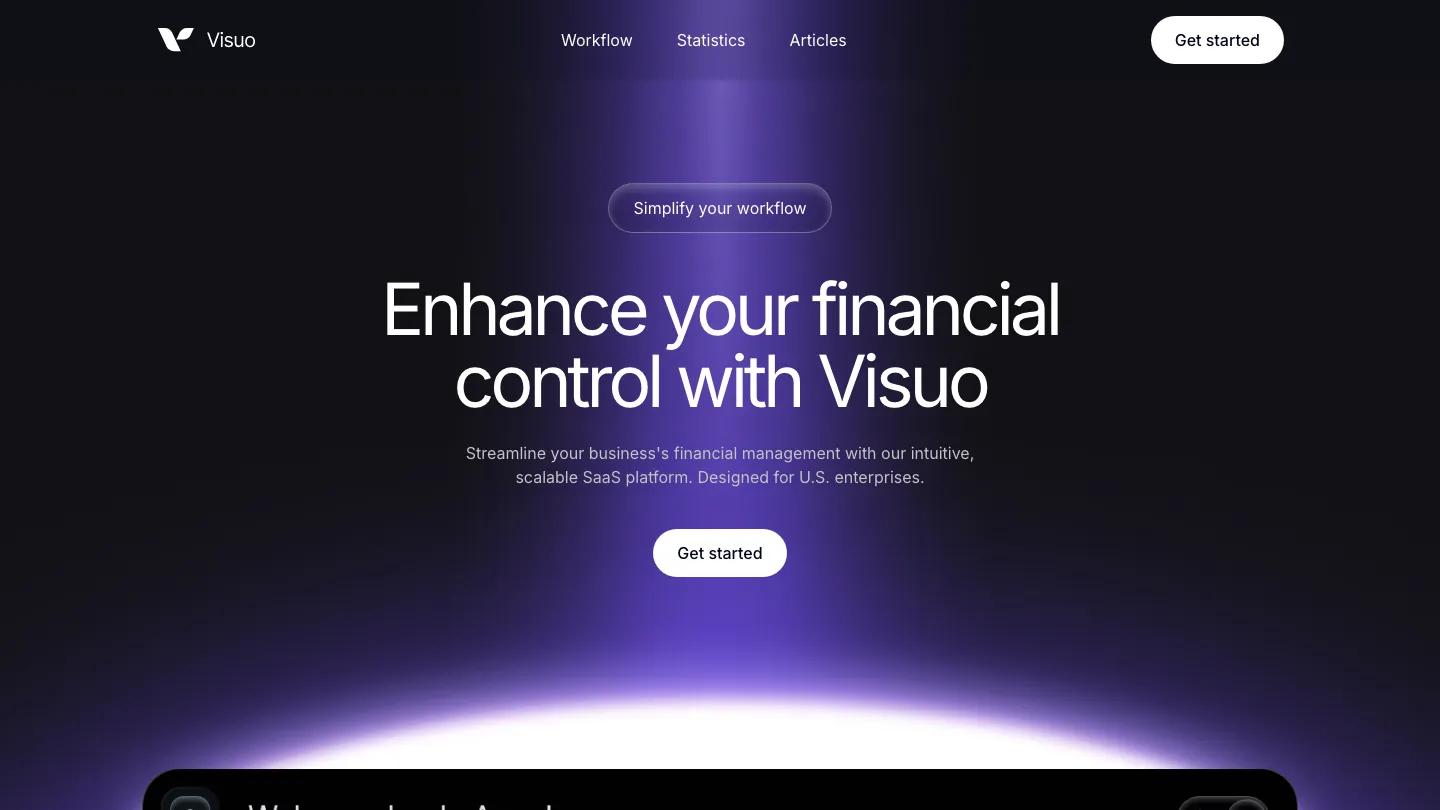
Visuo is a single dark page with a purple glow rising behind the headline "Enhance your financial control with Visuo". It walks through a four-step workflow (sign up, link your bank accounts and cards, bring in your data, then manage it in one place), a statistics block, testimonials from freelancers, a CFO and an operations manager at a nonprofit, and a short articles section.
The structure is sensible for an early product that doesn't need more than one page yet. The statistics cards, though, still credit a product called Datagrid, left over from another template. That's the kind of slip a finance buyer reads as carelessness, so check every line of copy, not only the headlines.
Flock Ramp
Design: 6.7/10
Dev: 7.3/10
Price: $99
Best for: crypto on and off ramps, payment gateways and exchanges that serve both businesses and individuals
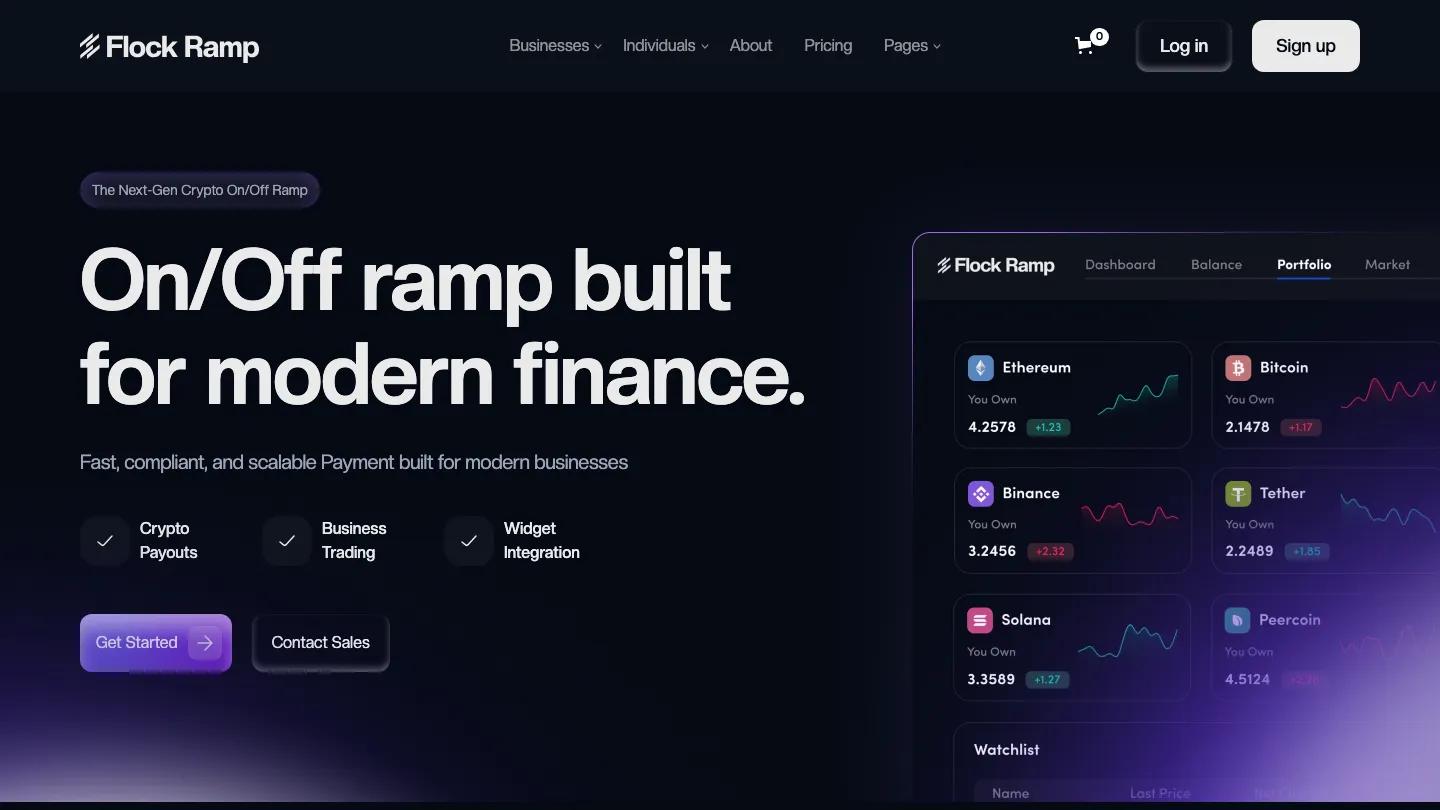
Flock Ramp has the most specialized crypto page set on this list. Under the headline "The Next-Gen Crypto On/Off Ramp", the menu splits into Businesses and Individuals, with separate overview pages, a Ramp Widget page, a Crypto Gateway page, Crypto Commerce, an Affiliate Program, Buy and Sell pages, pricing with single plan pages, integrations, careers, a blog, log in and sign up, and privacy and terms pages.
No other template here maps a two-sided crypto business this closely, and that saves weeks of information architecture. Design: 6.7/10 is the lowest design score on the list, so look at the homepage recording on its review page before you buy and judge whether the look fits your brand.
Fintora
Design: 7.2/10
Dev: 6.8/10
Price: Free
Best for: finance SaaS teams that want a bold, free one-page site with pricing and an FAQ
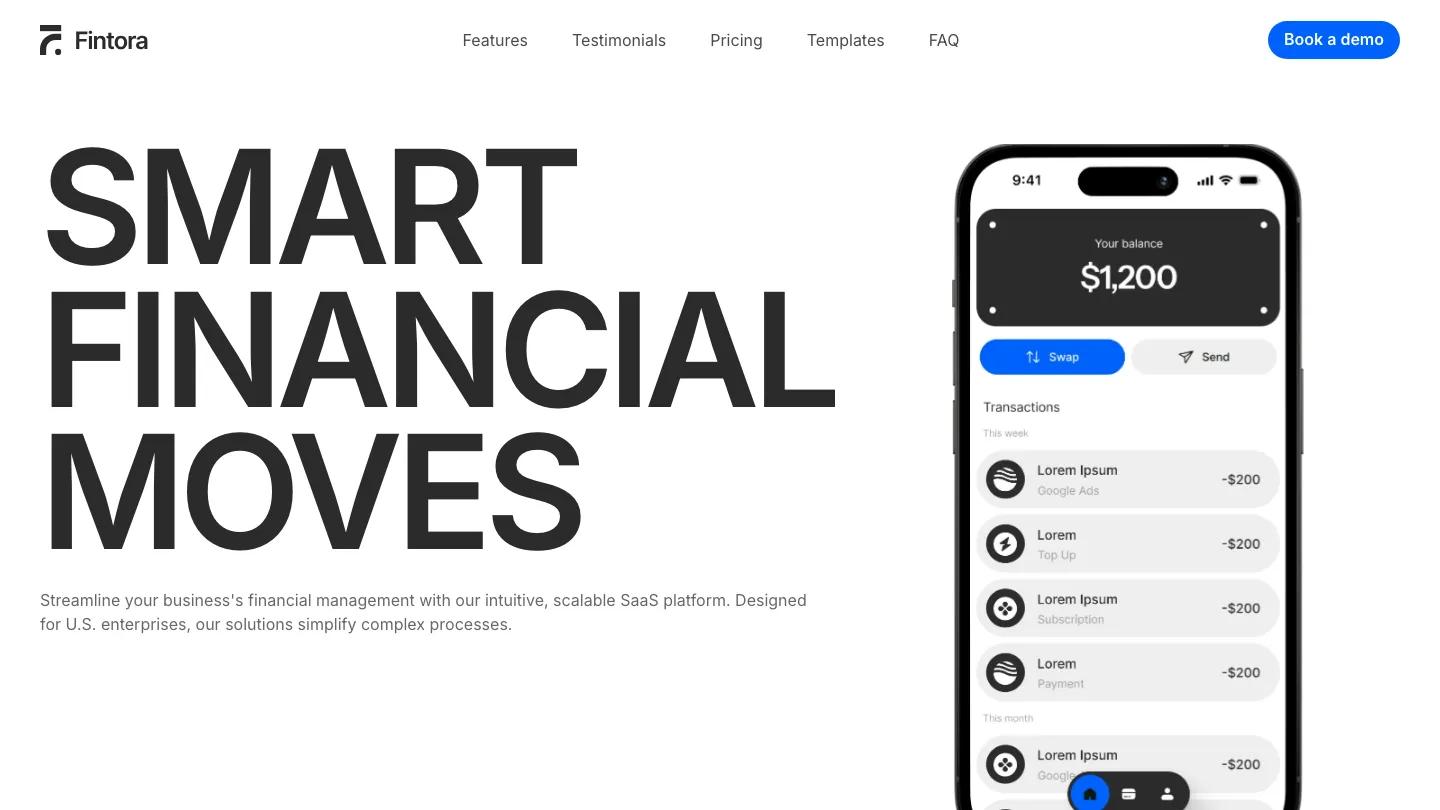
Fintora opens with "Smart Financial Moves" stacked in huge black capitals on white beside a phone showing a $1,200 balance and a list of transactions. It's a single page with features, real-time analytics, testimonials, pricing, an FAQ and a Book a Demo button, which covers what a B2B finance tool needs at launch.
It also has the most leftover placeholder content we found in this niche. One counter reads "205+ Soybean varieties", another says "$2k+ Raise Invest in 2024", a scrolling banner reads "WIT HPAYOUTI", and the phone's transaction list is lorem ipsum. It's free and the layout is strong, but plan an hour of cleanup before anyone sees it.
Why Only 14, and How We Chose Them
We started with the 16 templates that carry our Financial Services tag and opened every live demo. Four didn't belong. Axel is a general startup landing kit, OneDollar is a personal finance blog rather than a product site, Anker is an agency site, and Helexa sells an AI customer support chatbot. Then we searched our reviews for finance, banking, savings and payment products and found two strong templates missing the tag: Get Swipe and Catalis.
A template made the list only if its own demo is written for a money product: savings, payments, banking, cards, crypto, budgeting or investing. We ranked the 14 by Overall Score, and every one meets the 7.0 Overall floor that applies to our whole library. We didn't pad the title to a round number, and we'd rather show 14 real fits than 20 with portfolios mixed in.
Are There Free Fintech Website Templates Worth Using?
Yes, four. Wallet is the best free choice for a crypto app, with a security section most paid templates lack. MezApk is the best free choice for a card or expense app, once you rewrite the off-topic blog samples. Visuo and Fintora are free one-page sites for business finance tools, but both carry leftover copy from other products that you must remove before launch.
If your budget allows $49 to $99, Mobit, Finetra, Visto and Fizens give you more pages and more finished pricing sections. Get Swipe at $79 is the strongest template under $100 by score. Our website template price study shows how these prices compare with the wider market.
Fintech Templates vs SaaS Templates
Many fintech products are software, so a good SaaS template can work. The difference is what the page has to prove. A SaaS page proves the product saves time; a fintech page also has to prove your money is safe and the costs are clear. That's why the templates above lean on security sections, plan comparisons, legal pages and real product screens.
If your product is closer to general software with a payments feature, our lists of the best Framer SaaS templates and the best Webflow SaaS templates cover a wider field. Whatever you choose, no template ships the regulatory disclosures your product needs, so plan to add those with your own advisers.
Frequently Asked Questions

14 Best Beauty and Skincare Website Templates (2026)
by Lauren Smith
10 Best Wellness Website Templates for Studios, Therapists and Brands (2026)
by Emma Clark
9 Best Consulting and Professional Services Website Templates (2026)
by Lauren Smith
13 Best Photography Website Templates for Webflow and Framer (2026)
by Marcus Jones
10 Best Restaurant Website Templates for Webflow (2026)
by Marcus Jones