BepiColombo Reaches Mercury Orbit: What Happened, by the Numbers

After eight years and nine planetary flybys, the European and Japanese BepiColombo mission is in orbit around Mercury, the second spacecraft ever to get there. A software fault cut its capture burn short. We read ESA's own updates and put the facts, the numbers and the dates ahead in one place.
Last updated: November 24, 2026
A spacecraft that left Earth in October 2018 fired its engines over Mercury on Saturday evening, went quiet, and woke up in safe mode. A few hours later, its flight team confirmed the news they had waited eight years for: it was in orbit. BepiColombo, a joint mission of the European Space Agency (ESA) and the Japan Aerospace Exploration Agency (JAXA), is only the second spacecraft ever to orbit the smallest planet.
If you write about science, education, technology or simply good news, you'll want the facts straight: what happened during the burn, why getting to Mercury is so hard, what the mission will study and what happens next. We read ESA's own mission updates, its fact sheet and NASA's Mercury pages, compared them with the main coverage, and put the confirmed facts in one place. Where reports disagree, we say so.
Key Facts
- When: the capture burn began at 18:24 UTC on Saturday, November 21, 2026, as the spacecraft passed 635 km above Mercury ESA.
- What went wrong: a software issue involving attitude guidance and thruster control stopped the burn early and put the spacecraft into safe mode ESA.
- How much it achieved: about 77% of the planned change in speed, enough to be captured ESA.
- The result: a 75-hour orbit instead of the planned 58-hour orbit, with no extra burns needed ESA.
- The trip: launched on October 20, 2018, with nine planetary flybys on the way: one of Earth, two of Venus and six of Mercury ESA fact sheet ESA.
- A first: the first time a spacecraft has used "weak stability capture" to enter orbit around another planet ESA.
- Next: the two science orbiters separate on December 9 to 10, and science starts in April 2027 ESA.
What Is BepiColombo?
BepiColombo is a joint ESA and JAXA mission built to study Mercury from orbit. It's really two spacecraft that traveled stacked together: ESA's Mercury Planetary Orbiter (MPO), which will map the planet's surface and interior, and JAXA's Mercury Magnetospheric Orbiter, called Mio, which will study the planet's magnetic field and the space around it.
A third part, the Mercury Transfer Module, carried both orbiters on electric thrusters for most of the trip and was released on September 3, 2026 ESA. The mission is named after Giuseppe "Bepi" Colombo (1920 to 1984), the Italian mathematician and engineer whose 1970 idea of a Venus flyby let NASA's Mariner 10 pass Mercury three times instead of once ESA fact sheet ESA.
| Part | Built by | Mass | Instruments |
|---|---|---|---|
| MPO (Planetary Orbiter) | ESA | 1,230 kg | 11 |
| Mio (Magnetospheric Orbiter) | JAXA | 255 kg | 5 |
| Whole stack at launch | ESA and JAXA | 4,100 kg | 16 |
Masses and instrument lists come from ESA's fact sheet; the launch mass includes 1,400 kg of propellant. ESA says more than 35 European companies, plus teams in the US and Japan, helped build it.
What Happened During the Mercury Orbit Burn?
On November 21, BepiColombo turned itself for the maneuver at 16:51 UTC, which cut contact with Earth as planned. At 18:24 UTC, 635 km above Mercury, the MPO's four main thrusters began a burn meant to last 37 minutes. The burn ended early, the spacecraft dropped into safe mode, and the team had to work out where it was before they could celebrate ESA.
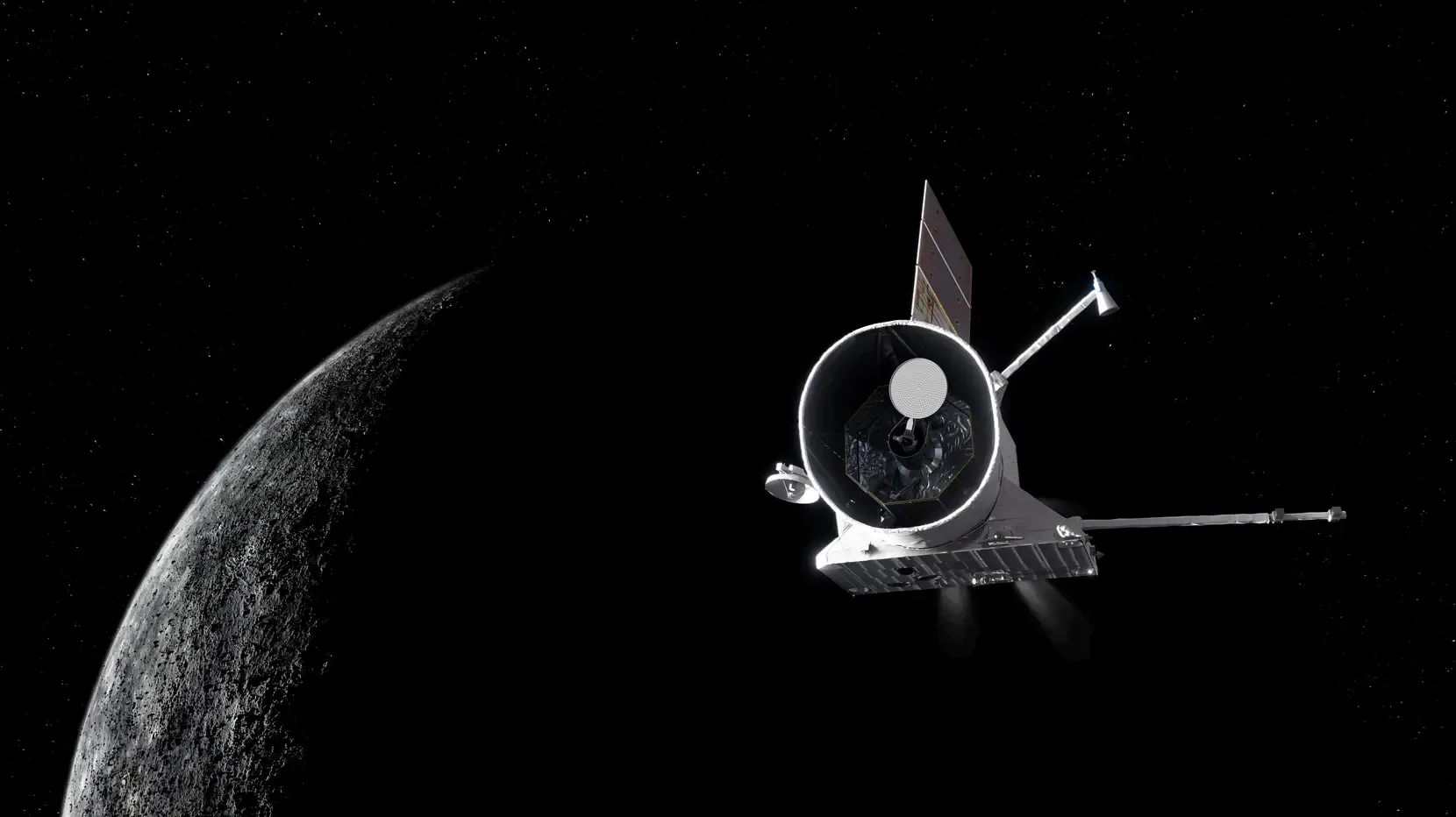
Flight Dynamics Manager Frank Budnik then announced, "We confirm Mercury orbit capture!" ESA traced the stop to a software issue involving attitude guidance and thruster control, and teams at ESA's operations center in Darmstadt, Airbus and JAXA are still investigating ESA.
What we know and what we don't, as of November 24:
| Question | Status |
|---|---|
| Is the spacecraft safe? | Yes, ESA confirms it |
| Is it in orbit around Mercury? | Yes, capture confirmed |
| Share of planned speed change | About 77% |
| Exact length of the burn | Not published |
| Root cause of the software fault | Under investigation |
| Effect on fuel for a longer mission | Not stated |
Some early reports said the burn ran the full 37 minutes. That figure is the plan; ESA hasn't given the actual burn time, as Tech Times points out. The Register notes that ESA hasn't said whether the new plan changes the fuel left over for a possible extension.
Does the Glitch Change the Mission?
So far, no. ESA says the rest of the arrival sequence has already been adapted to the new path, no extra burns are needed, and neither Mio's release on December 9 to 10 nor the MPO's planned science orbit is affected. The orbit is 75 hours long instead of 58, a starting point the next burns will shrink anyway ESA.
That's possible because the capture was never meant to be one big burn. ESA planned a series of smaller ones, which waste less fuel fighting gravity. As Budnik put it, "If we did it with fewer burns, we wouldn't have enough propellant to achieve what we want" ESA.
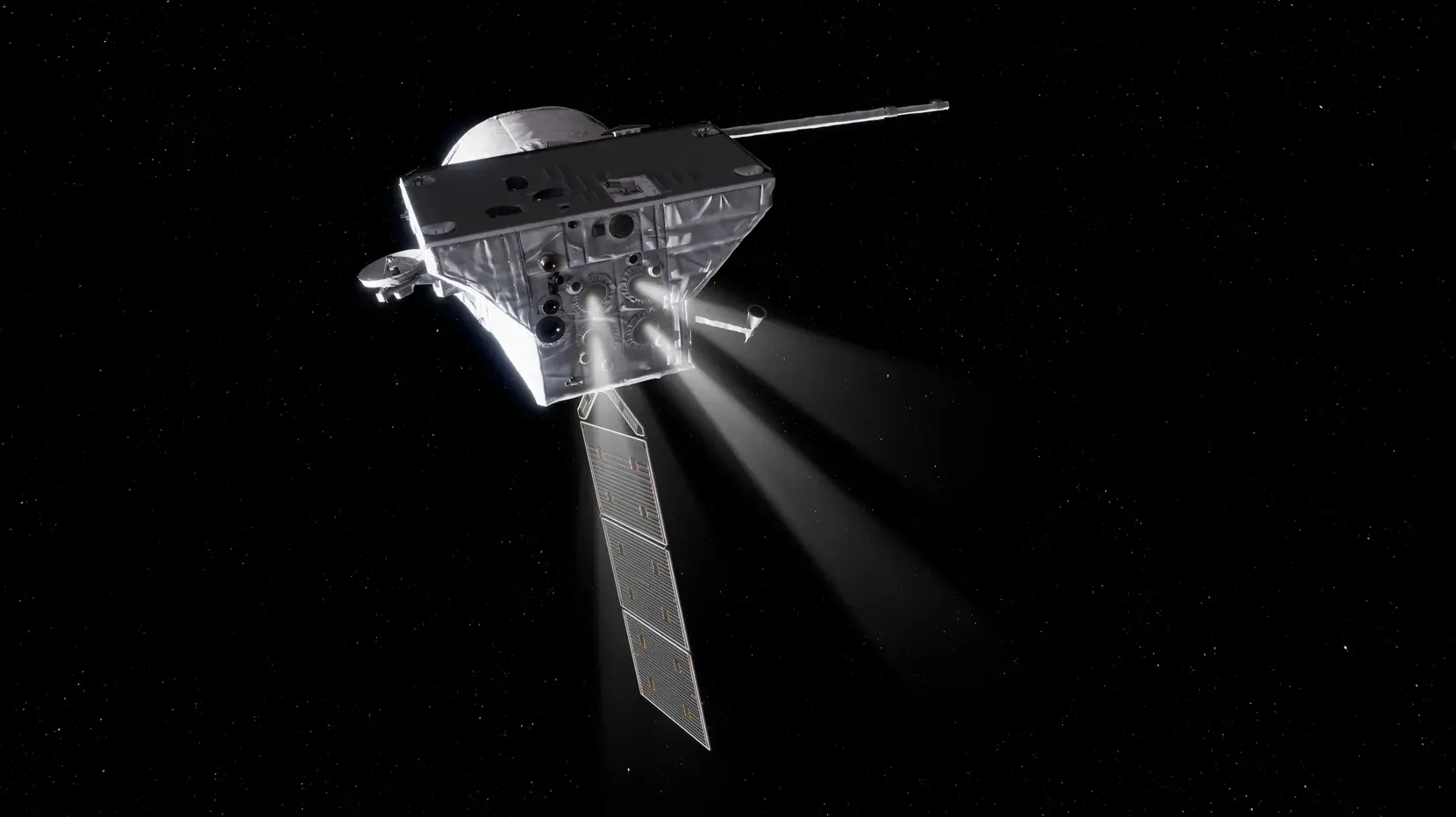
This isn't the mission's first scare. In April 2024, a power problem in the transfer module cut the thrust of its electric engines, and the arrival slipped by nearly a year ESA Space.com. ESA hasn't linked that problem to this one.
Why Is Mercury So Hard to Reach?
Mercury is closer to Earth than Jupiter, but harder to stop at. A spacecraft falling toward the Sun speeds up all the way, so it has to shed a huge amount of energy to be caught by a small planet. ESA says doing that with engines alone would need so much fuel that the spacecraft couldn't even be launched into Earth orbit, even on the most powerful rocket ESA.
The answer is to borrow brakes from the planets. Each of BepiColombo's nine flybys used a planet's gravity to slow it down a little. That's why the trip took about eight years: Mariner 10 needed just 147 days to reach Mercury in the 1970s, but it only flew past and never stopped ESA.
Weak stability capture is the last part of the trick. BepiColombo arrived slowly enough that Mercury's gravity could hold it with a smaller push than a usual capture needs. ESA says only some missions to Earth's Moon had used the technique before ESA.
How Does BepiColombo Compare With Earlier Mercury Missions?
Only three spacecraft have visited Mercury. NASA's Mariner 10 flew past three times in 1974 and 1975. NASA's MESSENGER became the first to orbit it, from March 18, 2011, until it ran out of fuel and hit the surface on April 30, 2015, at about 14,080 km/h NASA. BepiColombo is the third visitor and the second orbiter, and the first to send two spacecraft at once.
| Mission | Agency | At Mercury | Type |
|---|---|---|---|
| Mariner 10 | NASA | 1974 to 1975 | 3 flybys |
| MESSENGER | NASA | 2011 to 2015 | Orbiter |
| BepiColombo | ESA and JAXA | From 2026 | 2 orbiters |
Mariner 10 and BepiColombo dates come from ESA and its fact sheet; MESSENGER dates from NASA. MESSENGER found water ice in polar craters that never see sunlight and a magnetic field set well north of the planet's center, two puzzles BepiColombo is built to follow up.
What Will BepiColombo Study?
ESA lists seven science goals: how a planet so close to its star formed and changed, Mercury's surface, interior and craters, its very thin atmosphere (the exosphere), its magnetic field and where that field comes from, the ice near its poles, and a test of Einstein's general relativity ESA fact sheet. Two orbiters let it measure the planet and the space around it at the same time.
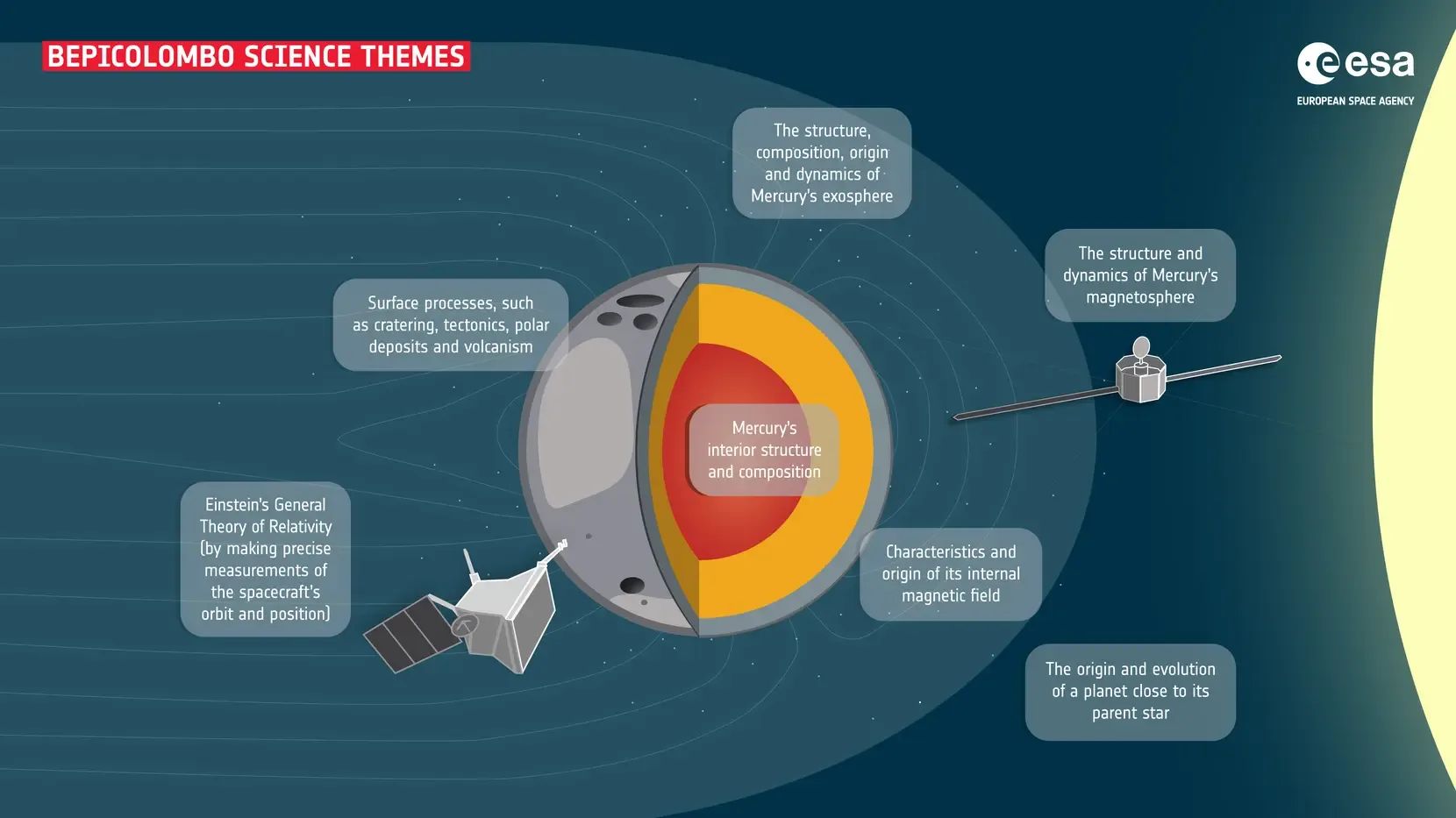
The two will fly very different orbits, both over the poles:
| Orbiter | Closest point | Farthest point | One orbit |
|---|---|---|---|
| MPO | 480 km | 1,500 km | 2.3 hours |
| Mio | 590 km | 11,640 km | 9.3 hours |
Orbit figures come from ESA's science fact sheet. The MPO stays close to map the surface; Mio swings far out to sample the magnetic bubble around the planet. The instruments are already awake: in September, the MPO's laser altimeter fired for 21.5 hours and sent out more than 700,000 pulses during a test ESA.
Mercury by the Numbers
Mercury is the smallest planet and the closest to the Sun. Here are NASA's figures, the ones writers most often need:
| Fact | Figure |
|---|---|
| Radius | 2,440 km (1,516 miles) |
| Average distance from the Sun | 58 million km (0.4 AU) |
| One year | 88 Earth days |
| One spin | 59 Earth days |
| One full day and night | 176 Earth days |
| Daytime high | 430°C (800°F) |
| Night low | minus 180°C (minus 290°F) |
| Moons | None |
All figures come from NASA's Mercury facts page. The odd day length is the fact readers love most: a single sunrise to sunrise on Mercury lasts two of its years.
How far away is the spacecraft from us? ESA said it was more than 200 million km from Earth when the transfer module separated in September ESA. At the speed of light, that's a little over 11 minutes for a radio signal each way (our calculation). For comparison, a message to Voyager 1, now one light-day from Earth, takes a full 24 hours.
BepiColombo Timeline
| Date | Milestone |
|---|---|
| October 20, 2018 | Launch on an Ariane 5 from French Guiana |
| On the way | Flybys of Earth (1), Venus (2) and Mercury (6) |
| April 2024 | Transfer module power problem delays arrival |
| September 3, 2026 | Transfer module released |
| November 21, 2026 | Mercury orbit capture, burn cut short |
| December 9 to 10, 2026 | MPO releases Mio |
| December 16, 2026 | Mio's sunshield is released |
| March 10, 2027 | MPO reaches its science orbit |
| April 6, 2027 | Science operations begin |
Dates come from ESA's fact sheet, its arrival timeline and its arrival updates. ESA notes that future dates may change. Its fact sheet, written before the delay, plans one year of science in orbit with a possible one-year extension.
What to Watch Next
- The fault report: ESA, Airbus and JAXA are investigating the software issue. Look for the root cause and the real burn length.
- December 9 to 10: the two orbiters separate, the moment the mission becomes two spacecraft.
- December 16: Mio's sunshield is released, leaving the Japanese orbiter on its own.
- March 2027: the MPO settles into its 2.3-hour science orbit after a series of smaller burns.
- April 2027: science begins, and with it the first data from Mercury orbit since MESSENGER ended in 2015.
We'll update this page as ESA confirms each step.
Where Our Facts Come From
Every figure on this page comes from ESA's own mission pages (its November 23 news release, its arrival updates, its fact sheets and timeline) and NASA's Mercury and MESSENGER pages, each linked where it's used. We used news coverage from Space.com, The Register and Tech Times only to check what was confirmed and what wasn't. The signal-time figure is our own calculation from ESA's distance. If you use these numbers, credit BestWebsiteTemplate.com and link to this page, or link straight to the ESA sources.