Android XR Glasses Explained: Price, Features, Privacy and Release Date

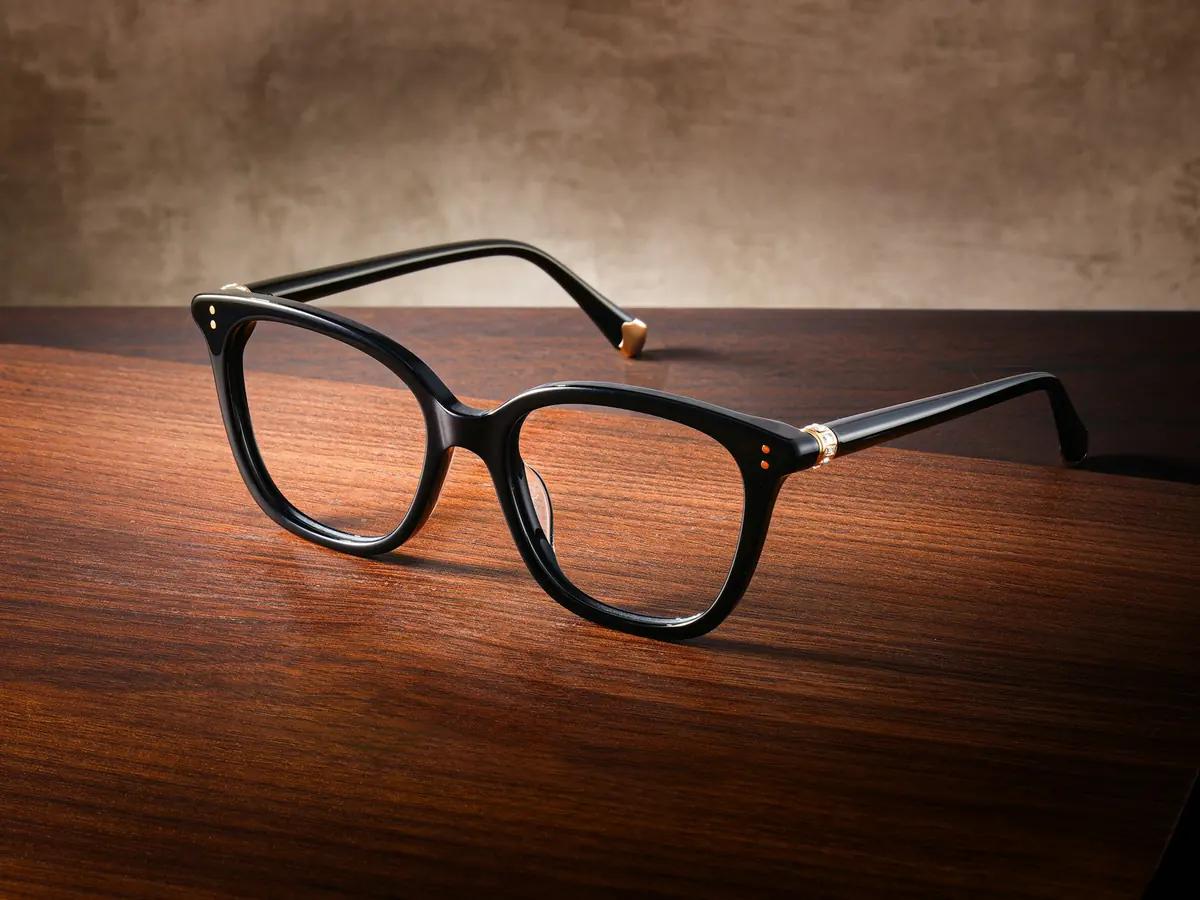
Google and Samsung's first Android XR glasses, made with Warby Parker and Gentle Monster, opened for preorder on November 12. We read every official page and the first hands-ons, and put prices, specs, privacy rules and the places where the companies disagree in one place.
Last updated: November 14, 2026
Smart glasses stopped being a Meta-only story this week. On November 12, Google and Samsung opened preorders for their first Android XR glasses, sold under the Warby Parker and Gentle Monster names, with Gemini listening in your ear and a camera in the frame.
If you write about tech, fashion, travel, accessibility or privacy, you will need the basics fast: what they cost, what they do, when they ship, how they compare with Ray-Ban Meta, and what they do with the faces of people around you. We read Google's, Samsung's and Warby Parker's own announcements plus the first hands-on reports, and this page puts the confirmed facts in one place, flags where the companies' own numbers disagree, and lists what is still unknown.
Key Facts
- Price: Warby Parker frames start at $395; Gentle Monster frames run $449 to $489 (Samsung Newsroom, November 12, 2026).
- Dates: preorders opened November 12, 2026, and the glasses go on sale in stores and online on December 10 Google.
- Where: United States and South Korea only, for Google accounts from those two countries, and the account must belong to someone 18 or older Google.
- No screen: every launch model is an audio and camera pair; a separate display model has been announced but has no date Google May 2026.
- Specs: about 41 grams, a 12 MP camera, up to 9 hours of battery, a Snapdragon AR1 Gen 1 chip and IPX4 water resistance Samsung.
- Privacy: an outward light shows when you save a photo or video, capture is blocked if that light is covered, and bystanders' faces are blurred before images go to Gemini Google.
- Works with iPhone: Google lists iPhone 13 Pro and later, alongside Pixel 7 and later and recent Galaxy phones.
What Are Android XR Glasses?
Android XR glasses are everyday-looking frames with speakers, microphones and a camera built in, run by Google's Android XR software and its Gemini assistant. The first pairs, officially called "Intelligent Eyewear", have no display: you talk to Gemini, it answers in your ear, and the camera lets it see what you see. Google makes the software, Samsung engineers the hardware, and Warby Parker and Gentle Monster design and sell the frames.
Some of the work happens on your phone rather than in the frame. Samsung describes a split design where the glasses hand off part of the processing to the connected phone, which is how they stay near the weight of ordinary glasses.
The name "Android XR" is the same platform Samsung's Galaxy XR headset runs. The glasses are the light, all-day end of that family, the headset the heavy, immersive end.
How Much Do Android XR Glasses Cost?
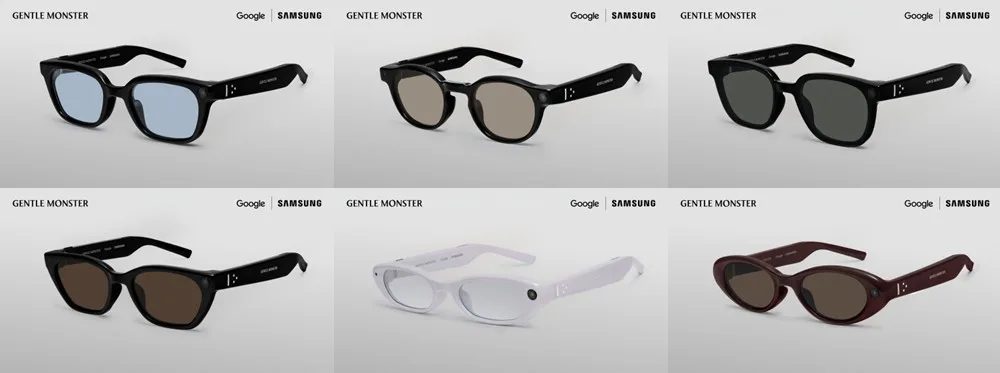
Android XR glasses start at $395 for the Warby Parker collection and $449 for Gentle Monster, with Samsung putting the Gentle Monster range at $449 to $489 depending on the model. Those are US prices. Neither Google, Samsung nor Warby Parker has published an official price for prescription lenses, and we found no official South Korean price.
| Collection | Styles | Starting price | Sold in |
|---|---|---|---|
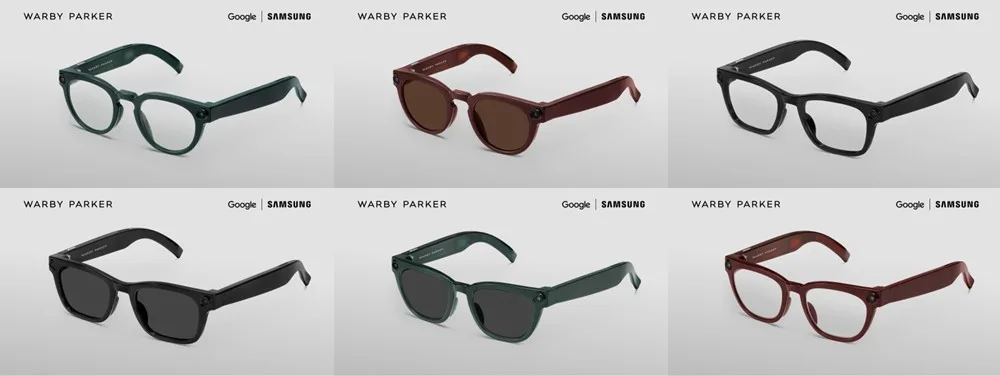
| Warby Parker | Alden, Reid, Wren | $395 | United States |
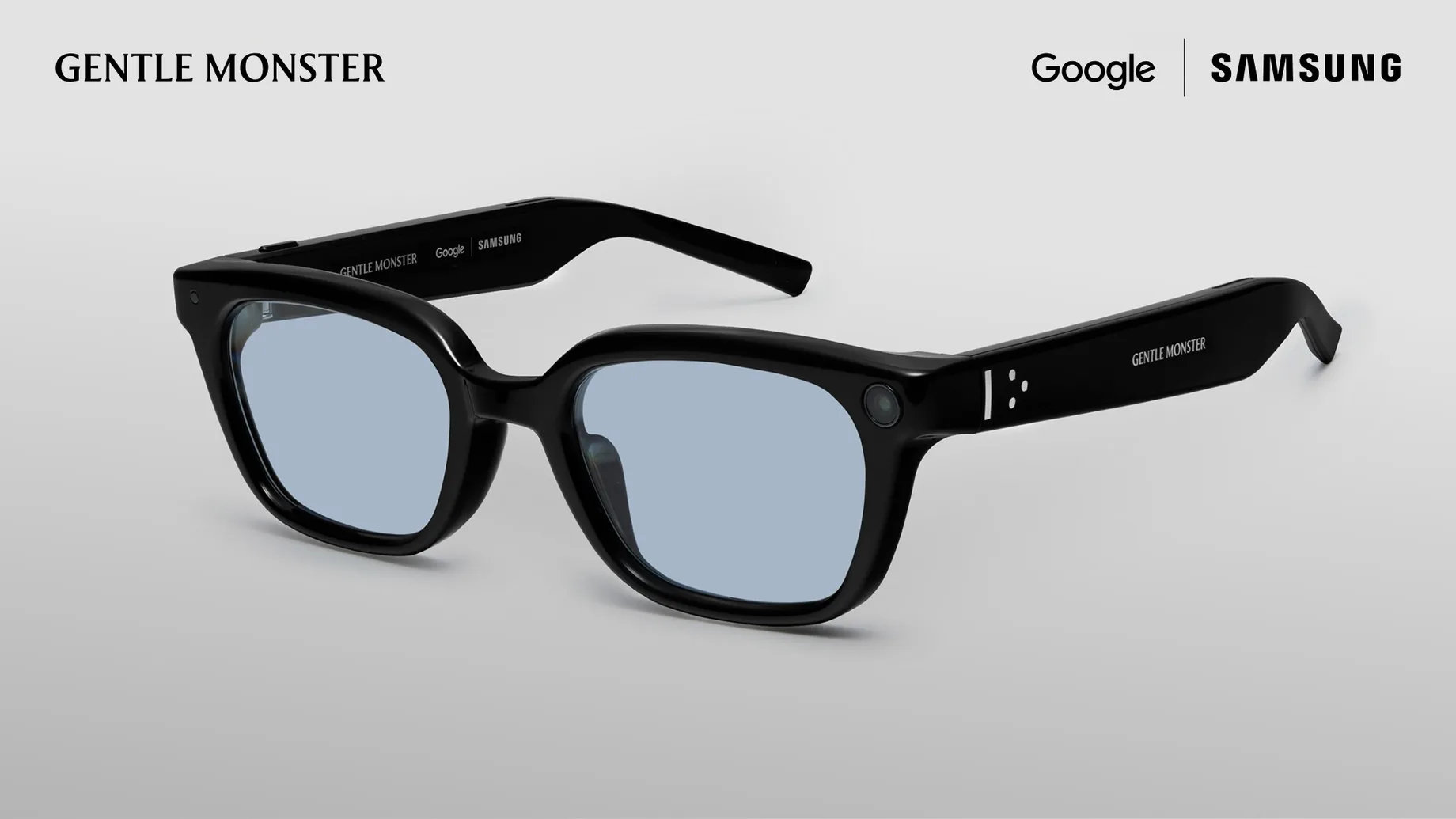
| Gentle Monster | 6 frame designs | $449 to $489 | United States, South Korea |
Samsung counts 30 designs in total: 16 Gentle Monster variations across 6 frames and 14 Warby Parker variations across 3 frames. Warby Parker offers each style as optical or sun in Pine, Saddle and Jet Black, and its own release lists prescription ranges and lens types, including progressives, but no lens prices Warby Parker. Some blogs quote prescription bundles at $495 and up; we could not match those numbers to any company page, so treat them as unconfirmed until the order pages show them.
When Do Android XR Glasses Come Out?
Android XR glasses go on sale on December 10, 2026, in stores and online, after preorders opened on November 12. Warby Parker says its deliveries start in mid-December. Hands-on demos run at select Gentle Monster, Warby Parker and Google Store locations, and Samsung says its own stores add demos from December 10.
The road here took almost two years:
| Date | What happened |
|---|---|
| December 2024 | Google announces Android XR for headsets and glasses |
| May 2025 | At Google I/O, Warby Parker and Gentle Monster are named as the first frame partners; Google commits up to $150 million to Warby Parker SEC filing |
| October 2025 | Samsung's Galaxy XR headset goes on sale at $1,799 9to5Google |
| December 2025 | Google confirms screen-free and display glasses, first ones "next year" Google |
| May 2026 | Google I/O previews the frames for "later this fall" |
| July 2026 | Samsung shows its eyewear at Galaxy Unpacked in London |
| November 12, 2026 | Preorders open with full prices and specs |
| December 10, 2026 | On sale in the US and South Korea |
What Can Android XR Glasses Do?
Android XR glasses let you ask Gemini about what you are looking at, hear Google Maps directions in your ear, translate speech across more than 70 languages, take calls and messages, play music from YouTube Music, Spotify or Apple Music, and take photos and video without reaching for your phone. You start Gemini by saying "Hey Gemini" or tapping the frame Google.
A few details matter for specific readers:
- Travel writers: translation detects the language on its own, and Maps gives turn-by-turn audio, so you can keep the phone in a pocket on a walking route.
- Accessibility writers: Guided Vision describes surroundings for blind and low-vision users, and Aira connects to human visual interpreters. At launch both work only with an Android phone, and Google says Guided Vision "may require a subscription".
- Samsung phone owners: Samsung adds extras such as capturing a whiteboard straight into Samsung Notes.
- What's missing: early hands-ons report that videos are capped at 90 seconds 9to5Google and there is no livestreaming Engadget.
Android XR Glasses Specs
The full spec sheet comes from Samsung, which engineered the hardware. Weight varies by frame because the frames are different shapes and materials.
| Spec | Value |
|---|---|
| Weight | About 41 g (39.6 to 43.9 g by frame) |
| Camera | 12 MP, 3K video at 30 fps |
| Battery | Up to 9 hours; up to 72 hours with the case |
| Chip, memory | Snapdragon AR1 Gen 1, 2 GB RAM, 64 GB storage |
| Audio | 2 speakers, 4 microphones |
| Other | IPX4, Wi-Fi 6E, Bluetooth 5.4 |
Phones: Pixel 7 and later on the September 2026 Android 17 update, Galaxy S, S FE, Z Fold, Flip and Fold Ultra on One UI 9.0 or later, and iPhone. Android Authority reports that other Android brands are not supported at launch Android Authority.
Where the Official Numbers Don't Match
Reading Google's and Samsung's pages side by side, the two partners describe the same product in slightly different ways. None of these gaps is large, but if you quote a number, quote the source with it.
| Topic | Google says | Samsung or Warby Parker says |
|---|---|---|
| iPhone support | iPhone 13 Pro and later | Samsung: iPhone 13 and later with at least 6 GB RAM, iOS 26.6 or later |
| Charging case | Recharges the glasses up to seven times | Samsung: up to 72 hours with the case |
| Gentle Monster price | From $449 | Samsung: $449 to $489 |
| Warby Parker demo stores | More than 360 locations | Warby Parker: 60+ at launch, 360+ the following week |
| South Korea | Collection available in the US and South Korea | Samsung: only Gentle Monster goes on sale in Korea |
The iPhone gap is likely the same rule written two ways, since the base iPhone 13 has less memory than the Pro. The safest wording for any article is Google's: "iPhone 13 Pro and later."
Are Android XR Glasses Private?
Google says the glasses light an outward LED whenever you save a photo or video, block capture if that light is covered or tampered with, blur bystanders' faces before images reach Gemini, and never save camera images from Gemini questions to Gemini History or use them for AI training or ads. Every pair also has a physical power switch, and stored data is encrypted Google.
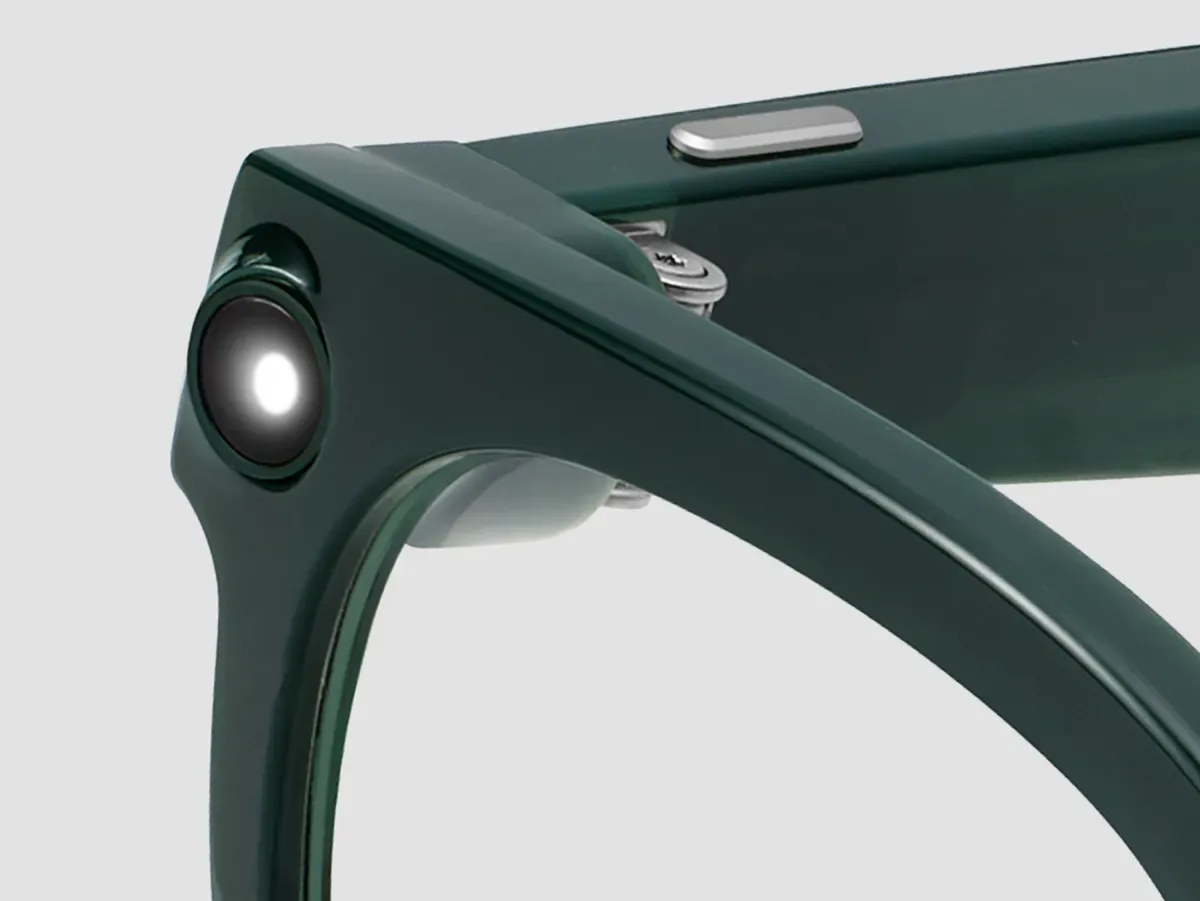
Buyers must also agree not to record people without permission, not to record in sensitive places and not to cover the light; Google says breaking those terms may get the glasses disabled.
What Google does not say is just as useful to know:
| Privacy question | Status |
|---|---|
| Faces blurred before Gemini sees an image | Confirmed by Google |
| Faces blurred in photos and videos you save | Not stated by Google |
| Light on while Gemini looks, without saving | Not stated by Google; 9to5Google reports it stays off |
| Blurring done on the glasses themselves | Not stated by Google; 9to5Google reports on-device |
| Private AI Compute for glasses | Google says "coming soon" |
In short, the light protects people from being recorded, and the blurring protects them from being analyzed by Gemini. Neither, as described today, covers everything.
How Do They Compare With Ray-Ban Meta?
On paper, the Warby Parker pair undercuts Meta's current camera glasses by $54 while matching the headline specs: Meta lists the third-generation Ray-Ban Meta at $449 with a 12 MP camera, 3K video and up to 9 hours of battery (Meta, September 23, 2026). The real differences are the assistant, the phones they pair with, and that Meta already sells a display model.
| Warby Parker (Google) | Gentle Monster (Google) | Ray-Ban Meta Gen 3 | Meta Ray-Ban Display | |
|---|---|---|---|---|
| Price | From $395 | $449 to $489 | $449 | $799 |
| Display | No | No | No | Yes |
| Assistant | Gemini | Gemini | Meta AI | Meta AI |
Meta Ray-Ban Display price from Meta (2025), including its Neural Band.
Google is entering a market Meta leads by a wide margin. The analyst firm IDC put Meta's share of XR glasses and headsets at 68.7% in the second quarter of 2026 and expects about 13 million smart glasses to ship in 2026, rising to 25 million by 2030 (IDC, September 2026). Those are analyst estimates, not sales figures from the companies.
What It Means and What to Watch
For most people, the news is that camera glasses now come from two of the biggest platforms, in frames sold by optical chains, at prices close to a good pair of prescription glasses. That puts them in front of a much wider audience than tech early adopters, and it puts privacy questions in cafes, classrooms and offices, not just on tech sites. If you write about how AI is moving off screens and into everyday objects, this sits next to the AI shopping agents that began booking rides and food orders for people this month.
Things to watch next:
- Official prescription prices on the Warby Parker and Gentle Monster order pages.
- Full reviews after December 10, with real battery life and how fast Gemini answers outdoors.
- The display model, which Google and Samsung have announced but not dated.
- Whether face blurring extends to saved photos and video, and when Private AI Compute arrives.
- More countries and more phones, since launch is limited to two countries and three phone families.
We will update this page as those answers arrive. For more on how new devices change what readers see, see our look at what a touchscreen MacBook Pro means for website design.
How to Cite This Page
You are welcome to use the tables and comparisons on this page in your own writing. Please credit BestWebsiteTemplate.com and link to this page. Every number above links to the company or publication it came from.