10 Best Shopify Retail & E-commerce Website Themes 2026

We tested dozens of Shopify themes this year. Most were forgettable. These 10 stood apart because they actually solve real problems for store owners: fast checkouts, beautiful product displays, and code that doesn't fight you. Here's what we found.
Most Shopify store owners never look at more than three themes before deciding. They pick the first one that looks decent, install it, and hope it converts. That's usually where the problems start. A theme that photographs well in a preview doesn't necessarily handle cart flow efficiently, mobile checkout smoothly, or perform well on page speed metrics. The gap between "looks good" and "works well" is where most stores struggle.
At BestWebsiteTemplate, we've spent months evaluating the current landscape of Shopify retail and e-commerce templates. We score every theme we review across two dimensions: design quality (visual hierarchy, typography, component consistency) and development quality (code efficiency, customization flexibility, feature depth). We don't just list templates and move on. We actually use them, push them, and figure out where they excel and where they fall short.
If you're building or redesigning a store in 2026, the 10 best Shopify retail and e-commerce website themes we've identified here represent the current ceiling for quality. These aren't the most expensive or the most famous. They're the ones that balance polish with functionality, and that handle the specific demands of selling products online better than anything else we tested.
What to Look For in Retail & E-commerce Templates
Product showcasing matters more than anything else. In e-commerce, your theme's primary job is to make products look incredible and get buyers to the checkout before they second-guess themselves. Look for themes that offer flexible product layouts, high-quality image handling, and smart use of white space around your catalog. Templates that treat products as static data rather than as design centerpieces will always underperform.
Checkout and cart flow should be invisible to the user. The best retail templates don't make you think about the journey from browsing to purchase. They minimize friction at every step: cart preview in the header, one-click proceed to checkout, and trust signals visible throughout. If you have to customize heavily just to get a sensible checkout flow, move on.
Performance and mobile experience aren't optional anymore. Google's ranking algorithms care about speed, and your customers' patience doesn't exist on a 3G connection. The best themes load product pages in under two seconds on mobile and render checkout without lag. Test this yourself before committing. A beautiful theme that's bloated is a store killer.
Flexibility within constraints is the sweet spot. You want a theme that comes with solid defaults for product pages, collections, and filtering, but also gives you enough control to make it feel like yours without needing to hire a developer. Overly rigid templates feel cookie-cutter. Overly open-ended ones require constant tweaking.
The Best Shopify Retail & E-commerce Templates Right Now
🏆 Baseline — The gold standard for focused retail stores
- ⭐ Overall Score: 9/10
- 🎨 Design: 9/10
- ⚙️ Development: 9/10
- 💰 Price: $400
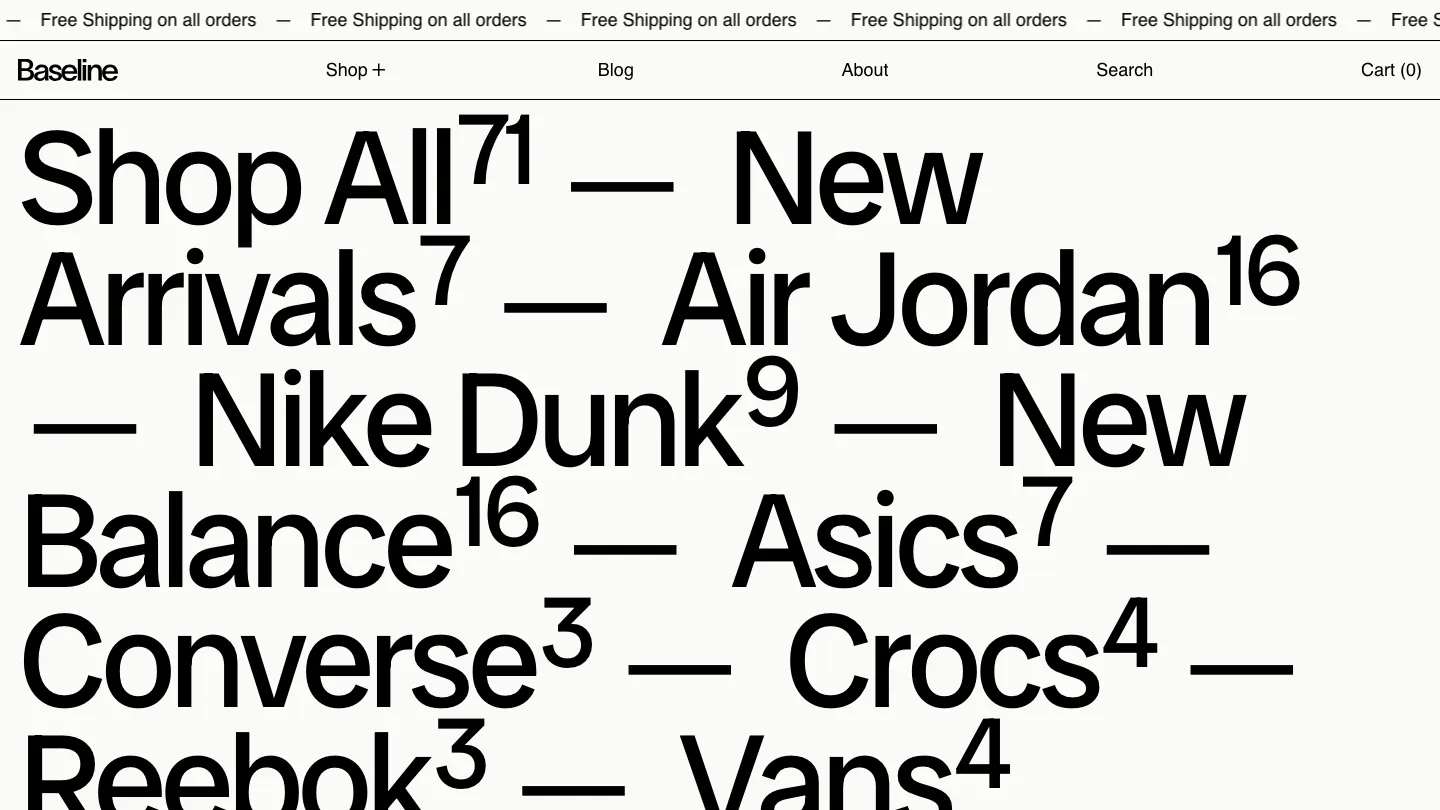
Baseline from Switch is what happens when a designer prioritizes clarity over decoration. The theme strips away the usual visual noise found in most retail templates and replaces it with structured typography and breathing room. Your products are the focus here, which is exactly how it should be. The implementation of sticky scrolling and overlay modals feels natural rather than gimmicky. It works as well for a 50-SKU boutique as it does for a 500-product fashion brand.
The development quality stands out immediately. The template is built with components that actually reuse properly, and the code doesn't carry unnecessary bloat. The site search implementation is fast, and the blog functionality integrates without feeling tacked-on. What keeps Baseline from a perfect score is that it lacks the animation finesse some competitors offer, and if your brand identity relies on bold color personality, you might need to customize more than expected. This theme is for store owners who believe products should speak louder than design.
> Best for: Minimalist brands, boutique retailers, or any store where product quality matters more than visual theatrics
Phase
- ⭐ Overall Score: 9/10
- 🎨 Design: 9/10
- ⚙️ Development: 9/10
- 💰 Price: $350
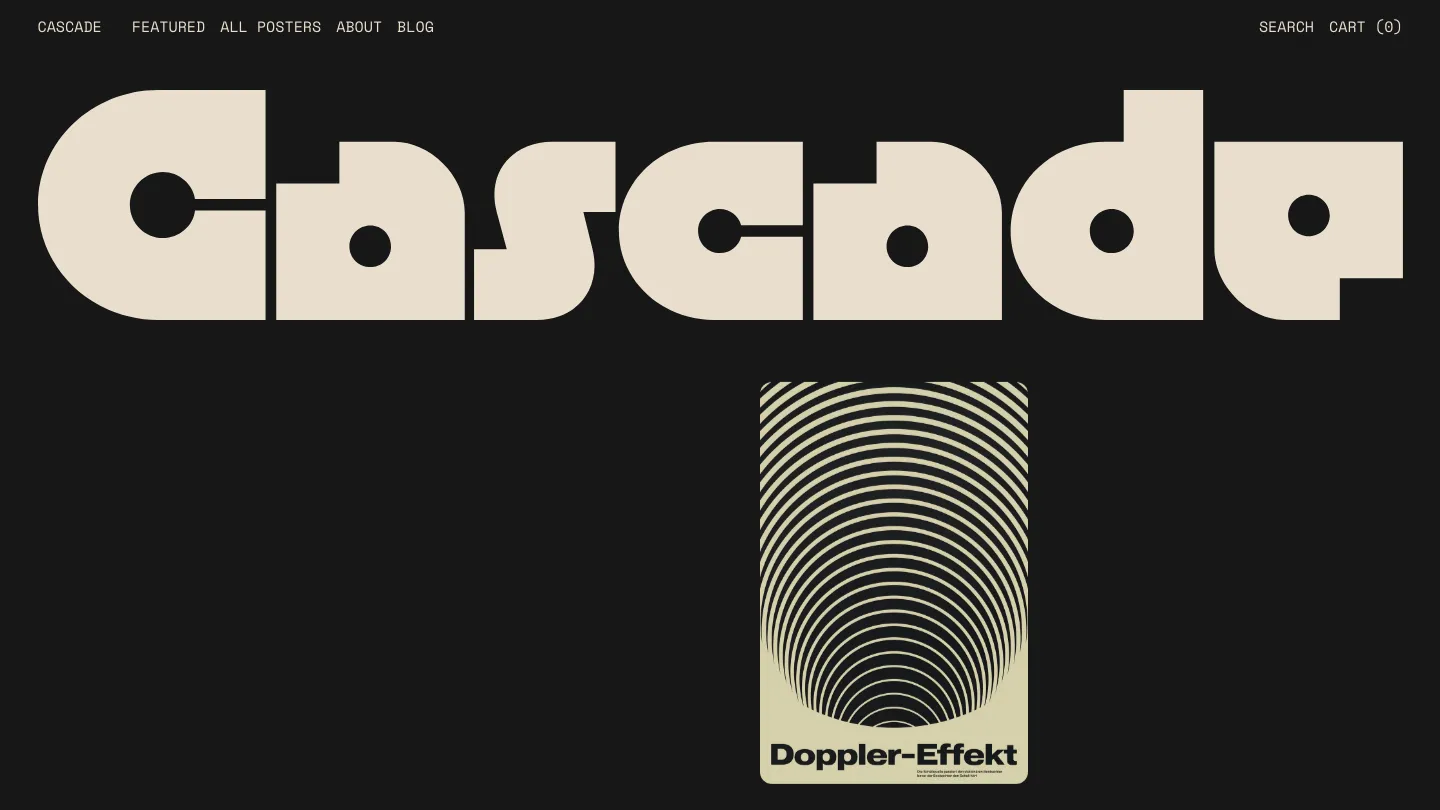
Phase brings animation into e-commerce thoughtfully. You get appear effects and scroll-triggered transitions without the theme feeling overcooked. The dark mode styling here is particularly well-executed. Product grids use subtle motion to guide the eye, and the checkout path maintains visual consistency throughout. The template handles both single-product focus and large collections with equal grace.
Where Phase really separates itself is in the components architecture. You get pre-built sections that snap together logically, so adding features like product testimonials, collection teasers, or trust badges doesn't require starting from scratch. The blog integration means you can run content marketing and e-commerce from the same platform without them feeling disconnected. The one limitation: if your aesthetic is ultra-minimalist, the animation layer might feel busy to you. But if you want motion that serves a purpose rather than just impresses, this is among the best implementations on Shopify.
> Best for: Contemporary fashion and lifestyle brands, digital product creators, stores selling art or design-forward items
Exhibit
- ⭐ Overall Score: 9/10
- 🎨 Design: 9/10
- ⚙️ Development: 9/10
- 💰 Price: $350
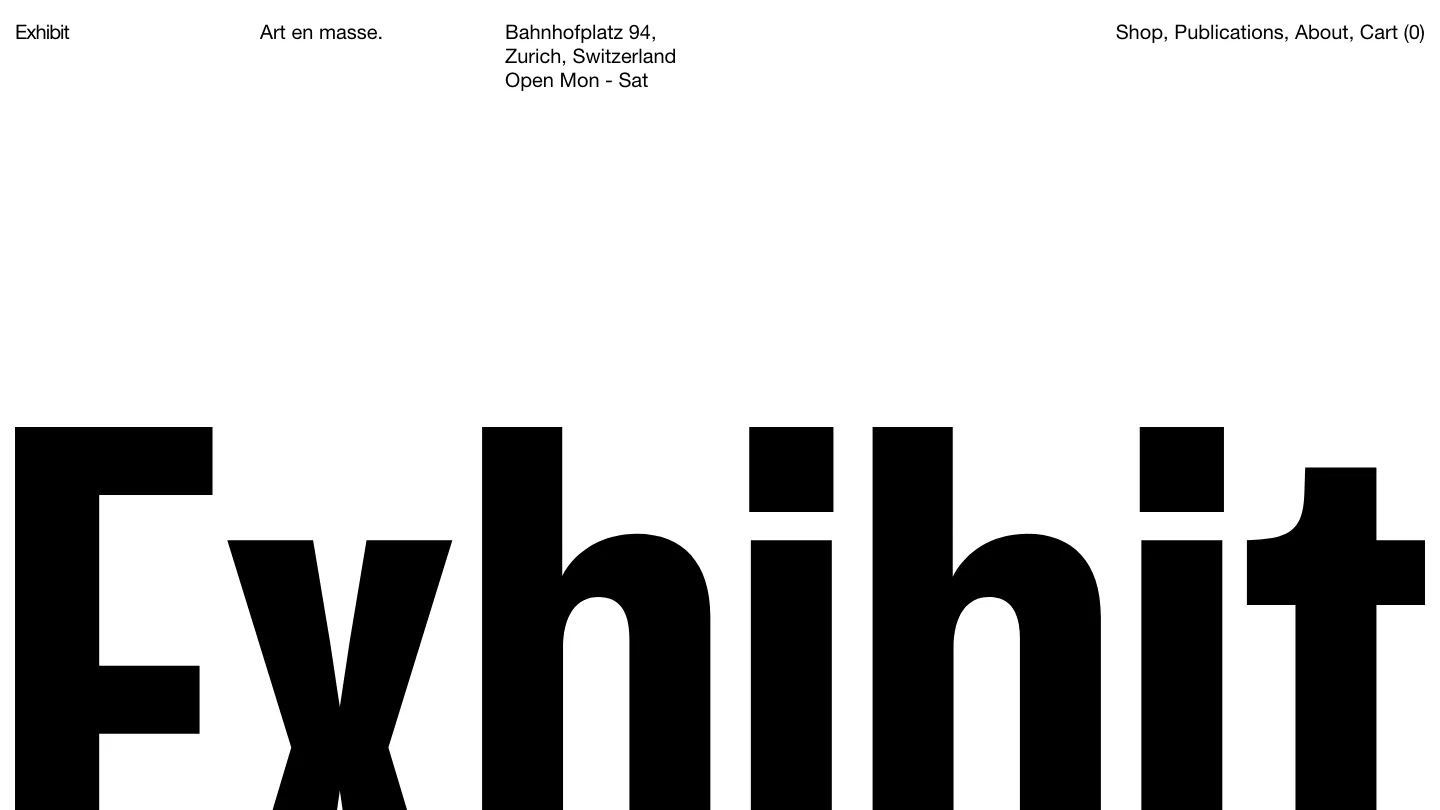
Exhibit leans hard into gallery aesthetics. If you're selling visual products—art, photography, home goods, or anything where the image is 80% of the appeal—this theme is built specifically for that use case. The monochromatic styling keeps focus on your imagery rather than competing with it. Product pages give images room to breathe, and the slideshow functionality handles multi-angle shots with precision. Collection pages use a grid system that adapts cleanly across devices.
The development foundation here is rock-solid. Rich media handling is native, so video embeds and high-resolution images load appropriately. The sticky scrolling behavior works in concert with the gallery aesthetic rather than feeling like an afterthought. The only genuine weakness is if you need complex product customization options or variant selection. Exhibit assumes relatively straightforward product structures. It's not built for stores selling highly configurable items with dozens of options per SKU.
> Best for: Art galleries, photography studios, home decor retailers, or any store where visual presentation is the primary sales driver
Reflections
- ⭐ Overall Score: 9/10
- 🎨 Design: 9/10
- ⚙️ Development: 9/10
- 💰 Price: $160

Reflections is the value outlier in this list. At $160, it undercuts most competitors by 50% while maintaining design and development scores that match themes costing three times as much. This is possible because UTD understood constraint as a feature rather than a limitation. The template is opinionated about layout and styling, which means less customization work and faster setup time. Colorful accents work against clean layouts, and the result feels fresh without trying too hard.
You get the full feature set: ecommerce, blog, forms, multi-page structure, localization support. The animation layer is present but subtle. Component reusability is baked in. What you don't get is the white-glove customization flexibility of more expensive options, but honestly, most stores don't need it. If you're bootstrapped or just testing a product idea, Reflections gets you to market fast without looking like you cut corners. The main trade-off is template personalization beyond what's designed in requires more effort.
> Best for: First-time store owners, independent creators, startups testing a business model, or stores running on tight budgets
🏆 Wrong — Peak flexibility meets professional polish
- ⭐ Overall Score: 9/10
- 🎨 Design: 9/10
- ⚙️ Development: 9/10
- 💰 Price: $380
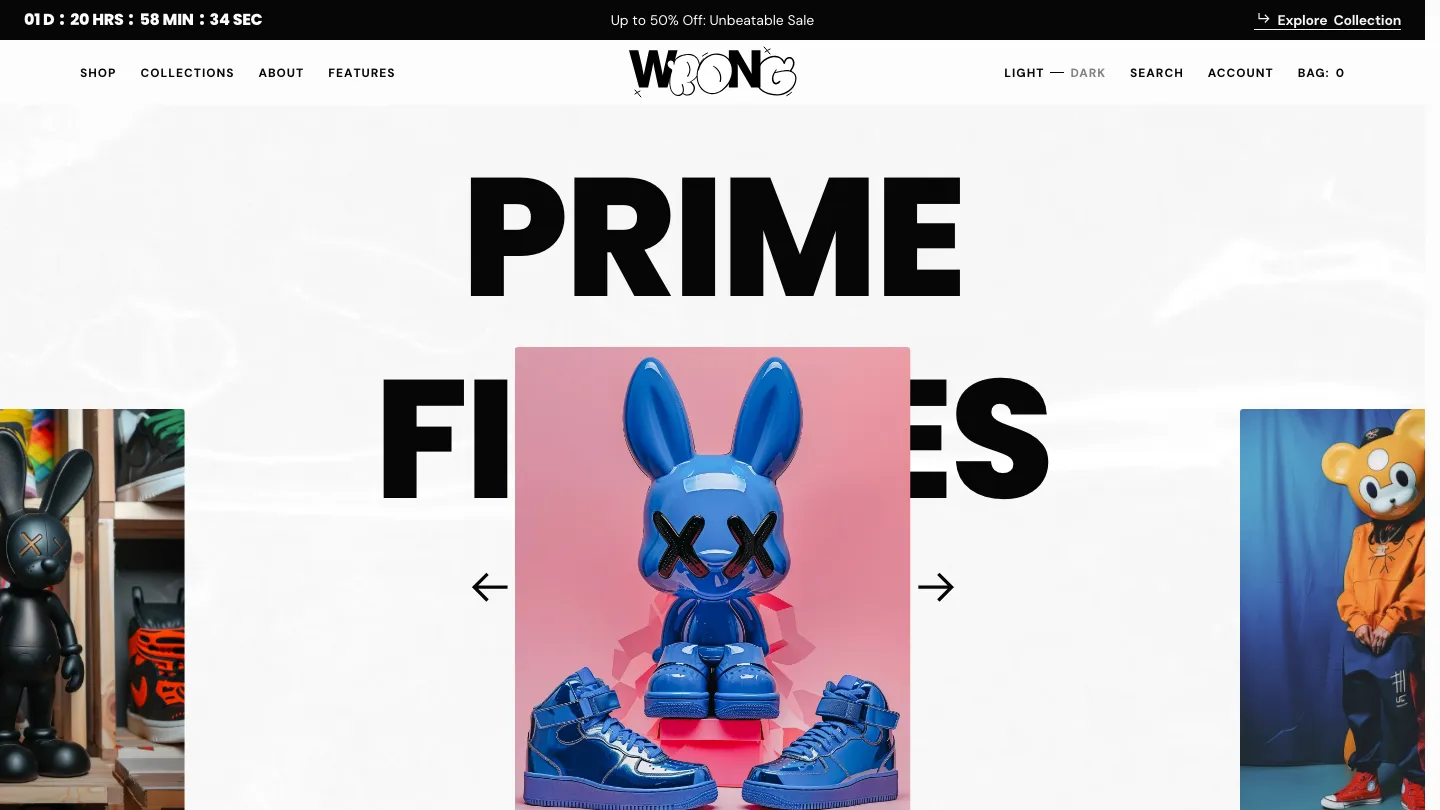
Wrong from Segment is the theme for stores that know exactly what they want and need the tools to build it. This template ships with light and dark themes, multiple layout options, and layout templates for nearly every page type. The CMS integration means you're not locked into Shopify's default content structures. The playful color options and bold typography choices give you room to inject personality without starting from scratch.
The feature depth is genuinely impressive. Multi-layout support lets different collections display differently. Scroll effects and overlays are implemented cleanly. The blog and ecommerce sections share design language while remaining distinct. You get responsive design that actually responds, not just shrinks. The development score of 9/10 reflects code that's well-organized and customization-friendly. This is the template to choose if you're not asking "what can I do with this" but rather "how much control can I actually get." The tradeoff is setup requires more decision-making upfront. Flexibility demands choice.
> Best for: Growing stores with specific brand requirements, agencies building for clients, stores planning to scale features, any retailer with strong visual vision
Mosaic
- ⭐ Overall Score: 8.75/10
- 🎨 Design: 8.5/10
- ⚙️ Development: 9/10
- 💰 Price: $380
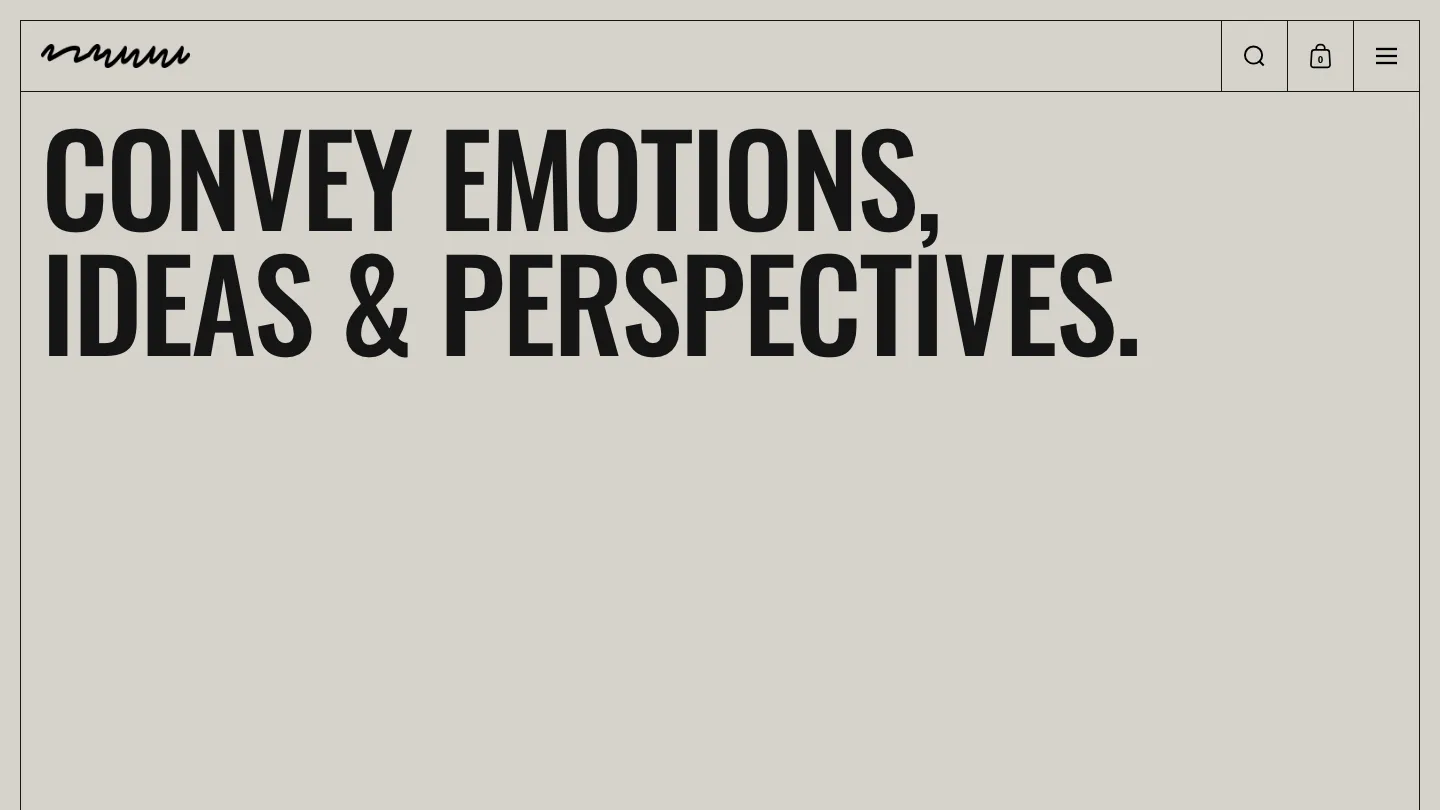
Mosaic from Krown Themes is grid-forward. This template assumes you want clean lines, strong typography, and organized content. The monochromatic styling keeps visual complexity low. Collections display in structured grids that perform well at every breakpoint. Project pages and work showcases nest naturally alongside product pages, so if you're selling and showing your process, the template handles both.
The development quality is strong. Components snap together logically. You get all the standard features plus localization, which matters if you're selling internationally. The design score sits slightly below perfect because the template's visual personality is fairly defined. If your brand voice is "organized and professional," Mosaic is your theme. If you need more visual flexibility or playfulness, you'll spend more time customizing.
> Best for: B2B retailers, furniture and home goods stores, professional services shops, interior designers selling products
Step
- ⭐ Overall Score: 8.75/10
- 🎨 Design: 8.5/10
- ⚙️ Development: 9/10
- 💰 Price: $320
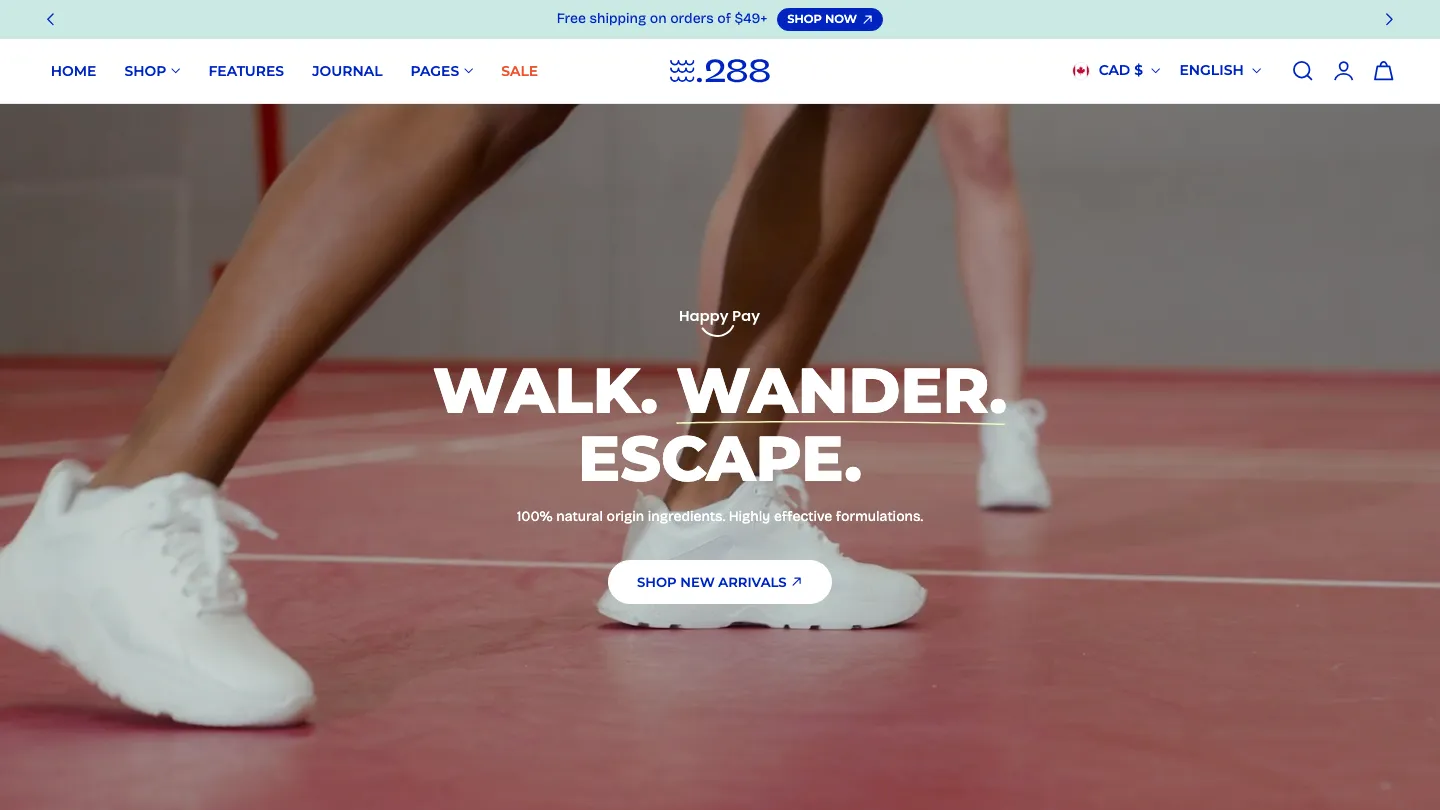
Step from OranThemes is built around progression. If your store has a natural customer journey or if you're selling products that benefit from step-by-step guidance, this template accommodates that structure natively. Waitlist functionality is built in, which is valuable for pre-launch or limited-inventory situations. The grid-based layout system is rigid by design, but that rigidity means every page feels related to every other page.
Layout templates and selection styles give you options without needing custom code. The multi-layout support means different collection types can present themselves differently. The template is responsive and performs well. The design is solid without being exceptional. This template asks less of you creatively because it assumes a particular structure. If that structure matches your store, you're moving quickly. If you need significant deviation from the default flow, expect to customize more.
> Best for: Subscription or membership stores, product launches with waitlists, educational product sellers, stores with intentional customer journeys
Artify
- ⭐ Overall Score: 8.5/10
- 🎨 Design: 9/10
- ⚙️ Development: 8/10
- 💰 Price: $380
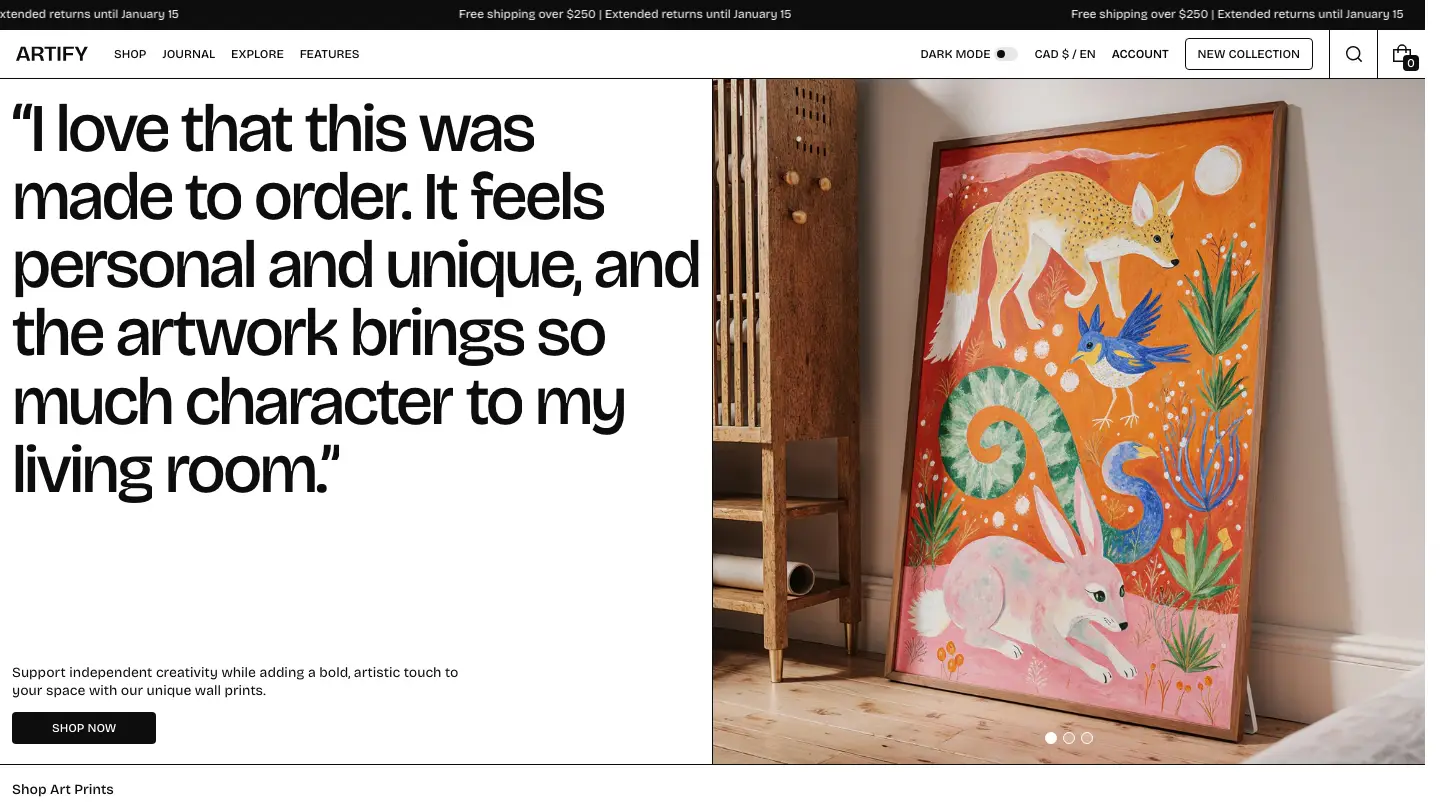
Artify from Apparent Collective is the design standout. The template looks exceptional. Typography is considered and colorful accents work throughout. Light and dark themes mean you get visual options without rebuilding. If you're selling design-adjacent products—art, photography, handmade goods—the visual presentation here elevates what you're selling.
The development score of 8/10 reflects that the design excellence comes with some customization overhead. The template isn't quite as flexible as the top performers, and the code requires more finesse if you want to deviate from defaults. The animation and component implementations are good but not exceptional. This is the template to choose when design perception matters most and you're willing to invest effort in customization. For stores where visual aesthetic is your competitive advantage, Artify delivers.
> Best for: Artisanal brands, handmade product sellers, design-focused retailers, photographers and creative professionals selling their work
Walls
- ⭐ Overall Score: 8.5/10
- 🎨 Design: 8/10
- ⚙️ Development: 9/10
- 💰 Price: $320
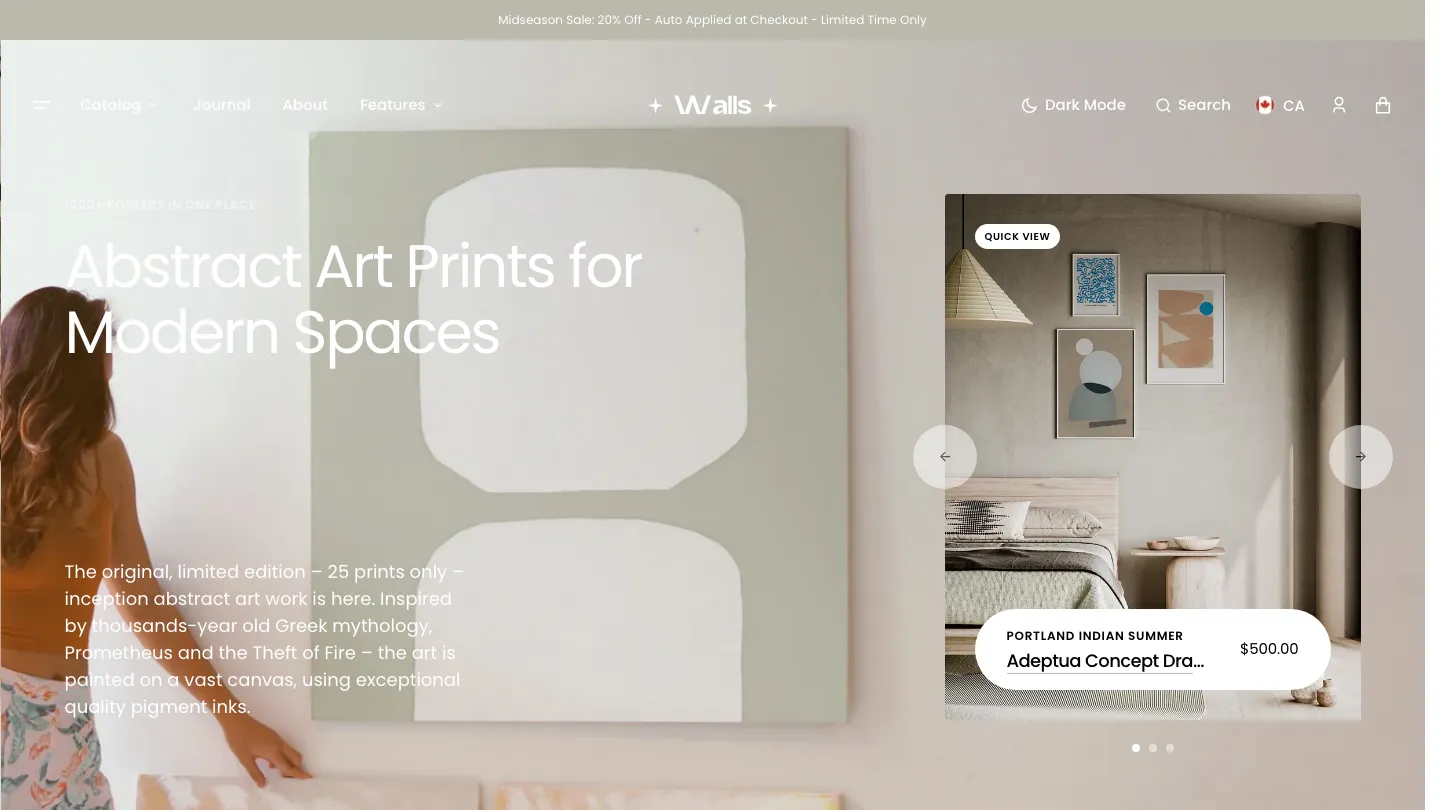
Walls from Superfine is built for stores that live in the intersection of design and functionality. The template offers light and dark theming, which you don't take for granted. Scroll effects and overlay modals are implemented with restraint. The typography system is well-developed. Collections and product pages feel cohesive without being repetitive.
The development quality is excellent. Components are modular and reusable. The form handling is solid. Dark theme implementation is native, not an afterthought. The design score sits at 8/10 because the template is intentionally restrained. It's not going to wow you with visual surprises, but it won't fail you either. This is the reliable choice for stores that want strong fundamentals without experimental design moves.
> Best for: Mid-sized retailers, fashion and accessories stores, stores selling across price ranges, brands focused on consistent experience
Laceup
- ⭐ Overall Score: 8/10
- 🎨 Design: 7.5/10
- ⚙️ Development: 8.5/10
- 💰 Price: $290
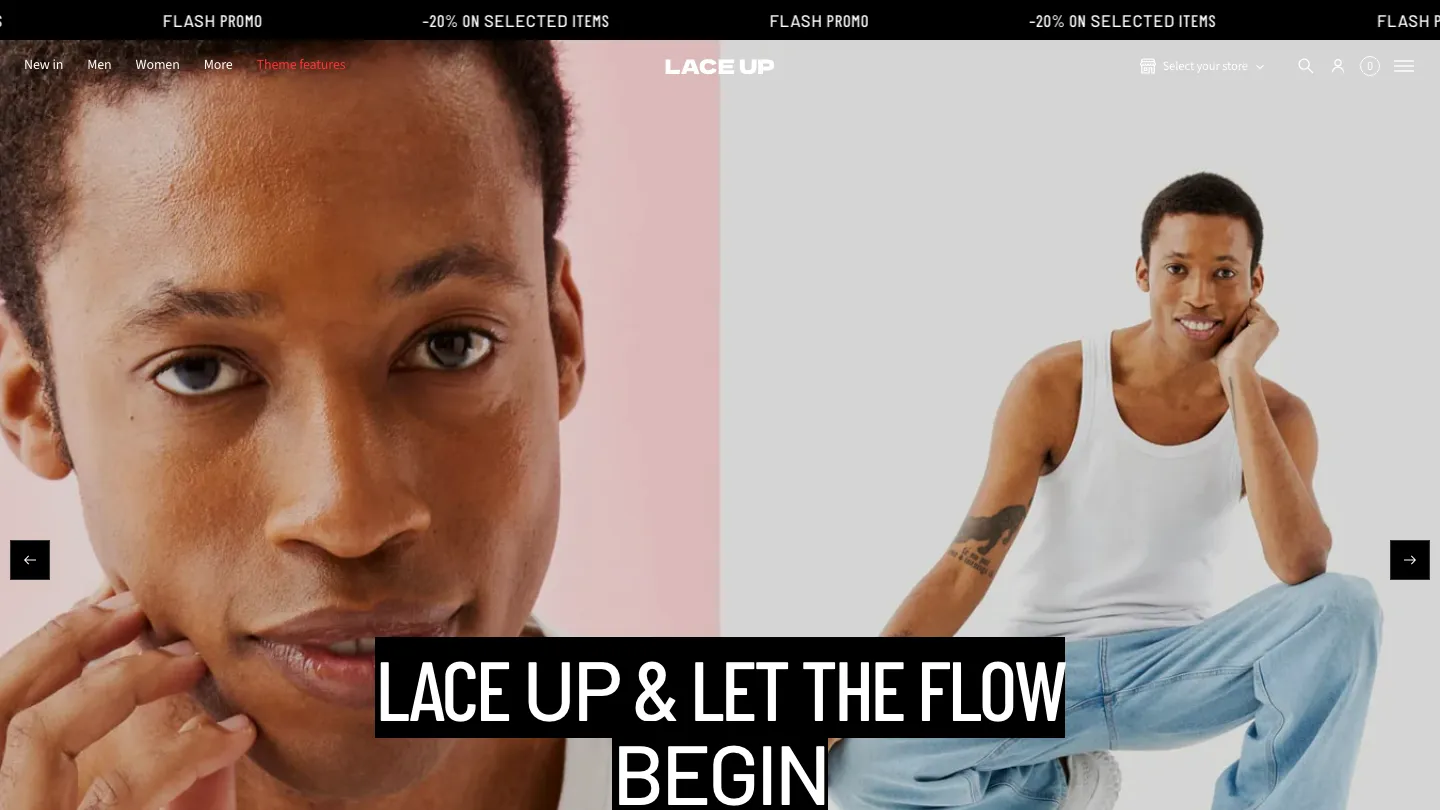
Laceup from Staylime is optimized for sports, fitness, and fashion categories. The template is bold. Typography is assertive. Animation adds energy. If your store sells to active audiences and your brand voice matches that energy, Laceup connects. The template includes forms for pre-orders or sign-ups, handles multi-page structures, and keeps things responsive across devices.
The development foundation is solid. Animation implementation feels purposeful rather than decorative. Components work together logically. The design score reflects that the visual personality is fairly specific. If your brand is quiet and minimal, Laceup will fight you. But if you're a yoga apparel brand, a CrossFit equipment retailer, or a sports enthusiast store, the template's boldness becomes an asset. At $290, you're also getting a price advantage without sacrificing build quality.
> Best for: Fashion and accessories retailers, sports and fitness brands, active lifestyle products, stores targeting younger demographics
How to Choose
Start by identifying which three templates above matched your immediate visual reaction. Design matters because you have to live with it, and customers notice consistency. Then check the development scores and feature lists. If you need multipage flexibility, CMS integration, or advanced layout options, Baseline, Phase, Wrong, and Exhibit handle that best. If you're selling a single product line or keeping things tight, Reflections or Laceup work fine. Look at the templates alongside your actual products. Open them, add a product to the cart, go through checkout. Does the flow feel natural or does it require explanation?
Budget is secondary to fit. Spending $160 on the wrong template costs more than spending $400 on the right one because you'll end up rebuilding anyway. That said, Reflections and Laceup punch above their price point. Check out our full Retail & E-commerce category if none of these ten resonate. The templates above represent our top picks, but we review dozens more across all skill levels and price points.
Our Top Pick
Wrong edges ahead as the best all-around choice for most stores launching or redesigning in 2026. The combination of design polish, development flexibility, and feature depth creates the fewest regrets later. You get light and dark themes, multi-layout support, and enough customization capability that you're not constrained by defaults. The price of $380 is standard for quality at this level, and the template rewards both hands-off users who want smart defaults and hands-on builders who need control. This is the theme that scales with your ambition, whether you're doing this part-time or running a full operation.
If budget is tight, Reflections at $160 delivers disproportionate value. If design is your primary focus, Artify deserves serious consideration. But for the majority of retailers trying to balance speed, quality, and flexibility, Wrong delivers consistently.
The retail template landscape in 2026 is competitive enough that there's no single wrong choice anymore. All ten of these themes work. The difference between them is in emphasis: whether you prioritize visual simplicity, design personality, component flexibility, or raw feature depth. Match that emphasis to your priorities, test the checkout flow, and you'll find the right fit.